AI Nose-Job Simulators vs Surgeon Morphs: What Is the Difference?
Compare AI nose-job simulators and surgeon morphs, including how each preview works, what it can communicate, and why neither predicts results.

On this page
An AI nose-job simulator and a surgeon-created morph can both help you visualize a possible change to your nose, but they are not interchangeable. One is typically an exploratory tool you can use before a consultation; the other is usually part of a surgeon-patient discussion informed by photographs, examination, and professional judgment. Understanding that distinction helps keep a useful image from turning into an unrealistic promise.
Important disclaimer: Every AI preview and surgeon morph is illustrative, not predictive. Neither can show your eventual surgical result or account fully for anatomy, healing, scar behavior, complications, or changes over time. This article is general education, not medical advice, diagnosis, or a recommendation to have surgery. Only a qualified clinician who evaluates you can discuss whether a procedure may be appropriate.
What is an AI nose-job simulator?

An AI simulator uses software to alter a photograph so you can explore how a different nasal shape might look in the context of your face. Depending on the tool, it may generate an edit automatically from a prompt or apply learned visual patterns to areas such as the bridge, tip, or profile.
The main value is low-friction exploration. You can test whether a subtle or more noticeable change feels harmonious, identify language for your preferences, and arrive at a consultation with better questions. On TryPlasticSurgery, for example, you can create an initial visualization and browse additional ideas through the explore page.
But an AI model is working from pixels, not a physical examination. It does not know the strength of cartilage, thickness of skin, internal airway anatomy, prior injury, surgical history, or how tissues will heal. A polished image may also smooth skin, shift lighting, or alter nearby facial features in ways that would not result from rhinoplasty. Treat it as a visual brainstorming aid rather than a feasibility assessment.
What is a surgeon morph?
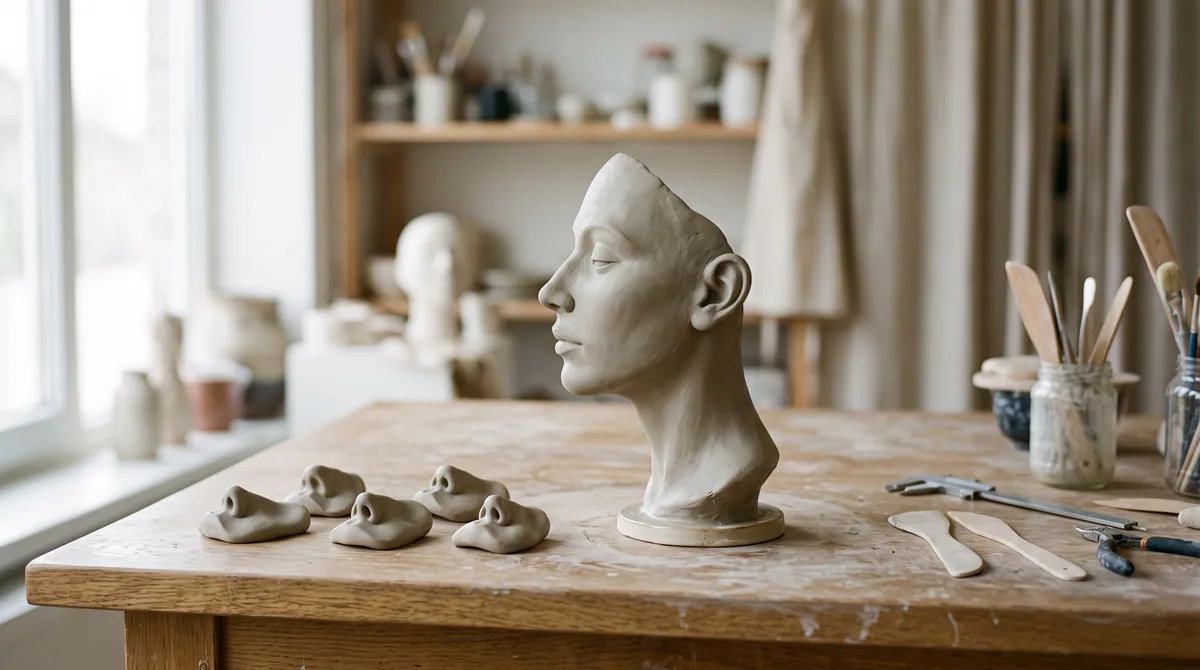
A surgeon morph is a photograph edited during or around a rhinoplasty consultation. The surgeon may adjust the profile, tip, bridge, nostrils, or proportions to support a conversation about goals. Because the morph is created by someone who can also review your history and examine you, it may be more closely connected to a proposed surgical strategy than a consumer AI image.
That does not make it a guarantee. A morph still cannot reproduce biological healing. Surgeons may use different software and different approaches: one may create a conservative target for communication, while another may show a wider range of possibilities. Ask what the image represents, which changes the surgeon considers technically plausible, and what uncertainty remains.
A morph is most useful as a shared reference. Instead of saying, “I want a perfect nose,” you can discuss specific observations: “I prefer this degree of bridge change,” or “I do not want the tip to look overly rotated.” It can reveal misunderstandings before any decision is made.
The key differences
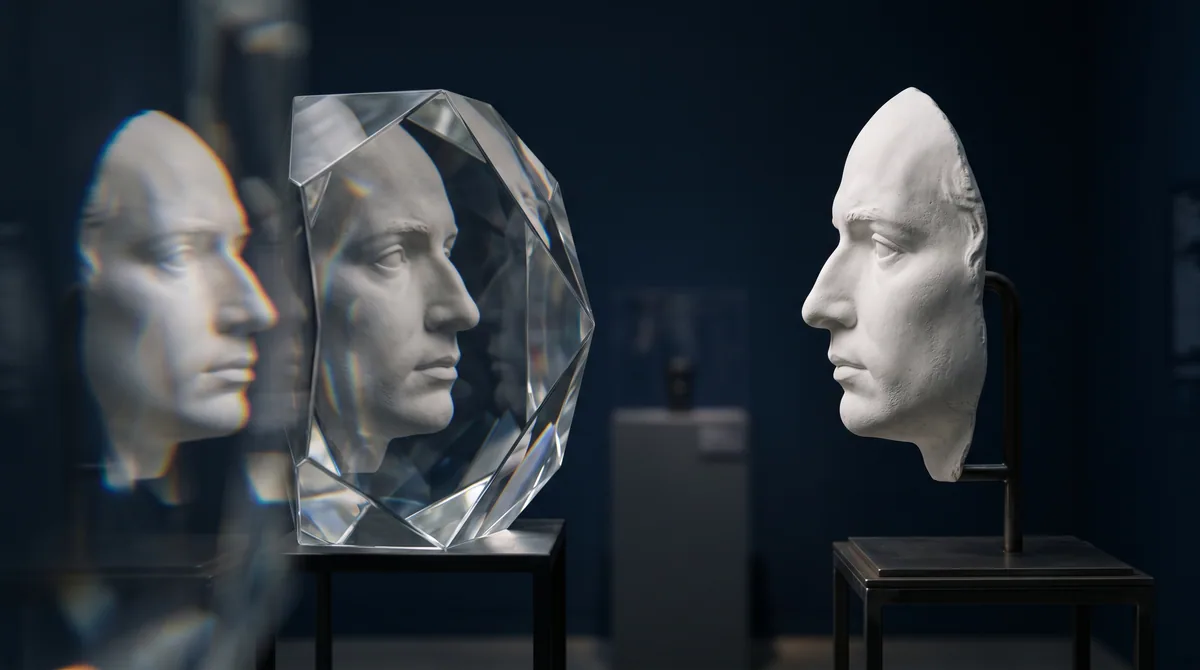
1. Purpose and timing
An AI preview often belongs to the early research stage. It can help someone who is merely curious explore preferences privately and without committing to treatment. A surgeon morph generally appears later, when a clinician is discussing goals, anatomy, options, limitations, and risks with a patient.
If you are beginning your research, the guide to rhinoplasty in 2026 and what a realistic AI preview can tell you offers more context on using visualization responsibly.
2. Information behind the image
A general AI tool may have only one or several photographs and a text instruction. A surgeon can combine standardized photographs with an in-person examination, medical history, breathing discussion, tissue characteristics, and clinical experience. That additional information can make the consultation conversation more individualized, although the resulting morph remains an approximation.
3. Connection to a surgical plan
An AI image is normally disconnected from technique. It may depict a shape without considering how—or whether—that shape could be approached safely. A surgeon morph may correspond to a possible operative concept, but it should not be interpreted as a precise plan by itself. Technical choices can differ, including the approaches discussed in open vs closed rhinoplasty. The appropriate discussion depends on the individual, not simply on an edited profile.
4. Convenience and access
AI simulation is usually fast and available before scheduling a medical visit. It can generate several concepts and make aesthetic exploration accessible. Surgeon morphing requires a consultation and may involve a fee, clinical photography, or a separate imaging appointment. Its advantage is not speed; it is the opportunity for real-time questions and professional context.
5. Risk of overconfidence
Both formats can look more certain than they are. High-resolution skin, clean contours, and perfect symmetry may imply precision that surgery and healing cannot promise. AI can also produce anatomically implausible edits. A surgeon morph may feel authoritative because a clinician created it, yet it is still a two-dimensional visual estimate. The safest interpretation is “a direction to discuss,” never “my after photo.”
Explore visually: If you want to explore a visual idea before a consultation, you can try the Nose Job – Plastic Surgery AI app. Treat every result as an illustrative conversation aid—not a prediction or surgical plan.
Which one should you use?
You do not necessarily have to choose. The tools can serve different stages of the same decision process.
Use an AI simulator to:
- Explore whether you prefer subtle, moderate, or more visible changes.
- Compare several aesthetic directions before a consultation.
- Practice describing what you like and dislike.
- Consider how a change appears alongside your other facial features.
Use a surgeon morph to:
- Discuss whether an aesthetic direction may be compatible with your anatomy.
- Clarify what the surgeon understands your goals to be.
- Connect visible changes with limitations, tradeoffs, and possible techniques.
- Ask how function, healing, and uncertainty affect the conversation.
Neither tool should be used to self-assess candidacy, select a surgical technique, or diagnose a functional concern. If breathing, trauma, or other symptoms are part of your reason for seeking care, discuss them directly with an appropriately qualified healthcare professional.
How to bring an AI preview to a consultation
A thoughtful surgeon should be able to discuss a reference image without treating it as an order. Bring the original photo as well as the AI edit so the changes are easy to compare. Explain which element matters most and which artifacts you do not intend—for example, “I like the softer bridge, but the app also changed my chin and skin.”
Ask open questions rather than requesting an exact replica:
- Which aspects of this image appear plausible to discuss, and which do not?
- What anatomical or healing factors could limit this direction?
- Did the software alter features outside the nose?
- How would functional considerations affect the plan?
- What range of outcomes and tradeoffs should I understand?
For a fuller appointment checklist, see 15 questions to ask at a rhinoplasty consultation. Verify credentials through the relevant medical board in your country, and do not let an attractive simulation replace informed consent or a careful discussion of risks and alternatives.
Red flags in any simulated image
Pause if a preview removes all asymmetry, changes unrelated features, alters the lighting, or is presented as an “ideal” or guaranteed result. A sound consultation leaves room for uncertainty and covers goals, limitations, function, recovery, risks, alternatives, and the option not to proceed.
The practical takeaway
AI nose-job simulators are useful for accessible visual exploration. Surgeon morphs are useful for a more contextualized conversation with the clinician who may provide care. The latter may be more informed by anatomy and technique, but neither predicts the final result.
The best use of either image is to discover and communicate preferences while remaining flexible. Start with an illustrative AI preview, notice what you actually respond to, and then ask a qualified surgeon to explain what is realistic, what is uncertain, and what tradeoffs deserve consideration.
Key Takeaways
- AI previews are consumer exploration tools; surgeon morphs are part of a clinical discussion.
- Neither type of image can guarantee a result or assess surgical feasibility.
- Bring modest, clearly labeled preferences to a qualified surgeon rather than treating a simulation as a target.
Want to explore a visual idea privately? Learn about Try Plastic Surgery or download the iOS app. Results are illustrative and are not medical advice or predicted surgical outcomes.