Hair Transplant Donor Area Recovery: What to Expect
Hair transplant donor area recovery explained: learn the healing timeline, care steps, warning signs, and questions to ask your surgeon.
On this page
Hair transplant donor area recovery usually means several days of tenderness and tiny crusts, followed by gradual settling over roughly two weeks; short hair then disguises the area as it grows. Your surgeon’s instructions take priority because healing varies with technique, extraction pattern, skin response, and the number of grafts removed.
How long does hair transplant donor area recovery take?
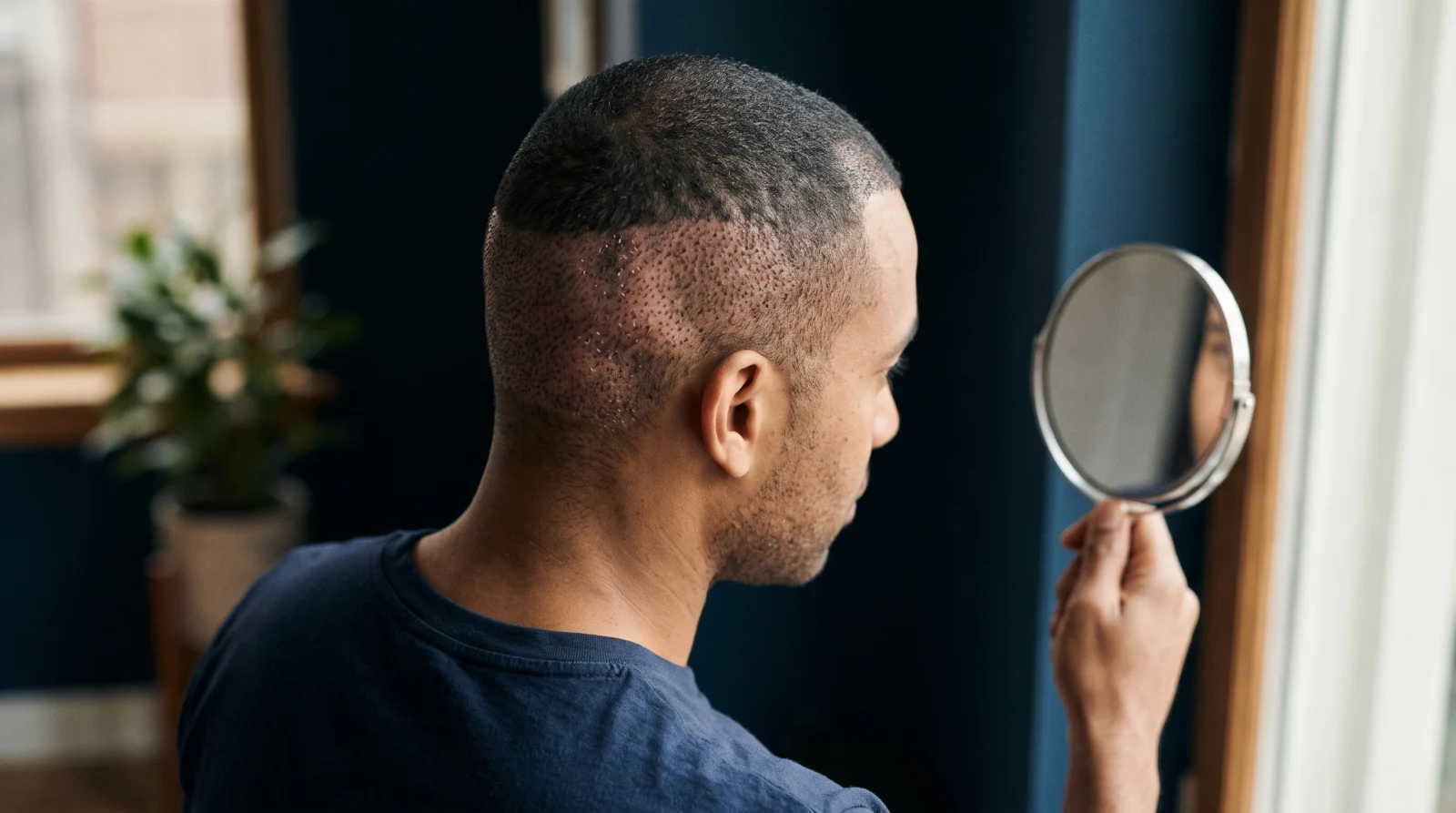
Most people notice the biggest visible changes during the first 7–14 days. In the first few days, the back and sides of the scalp can feel tight, tender, itchy, or mildly numb. Small extraction points may look pink and develop fine crusts before they close.
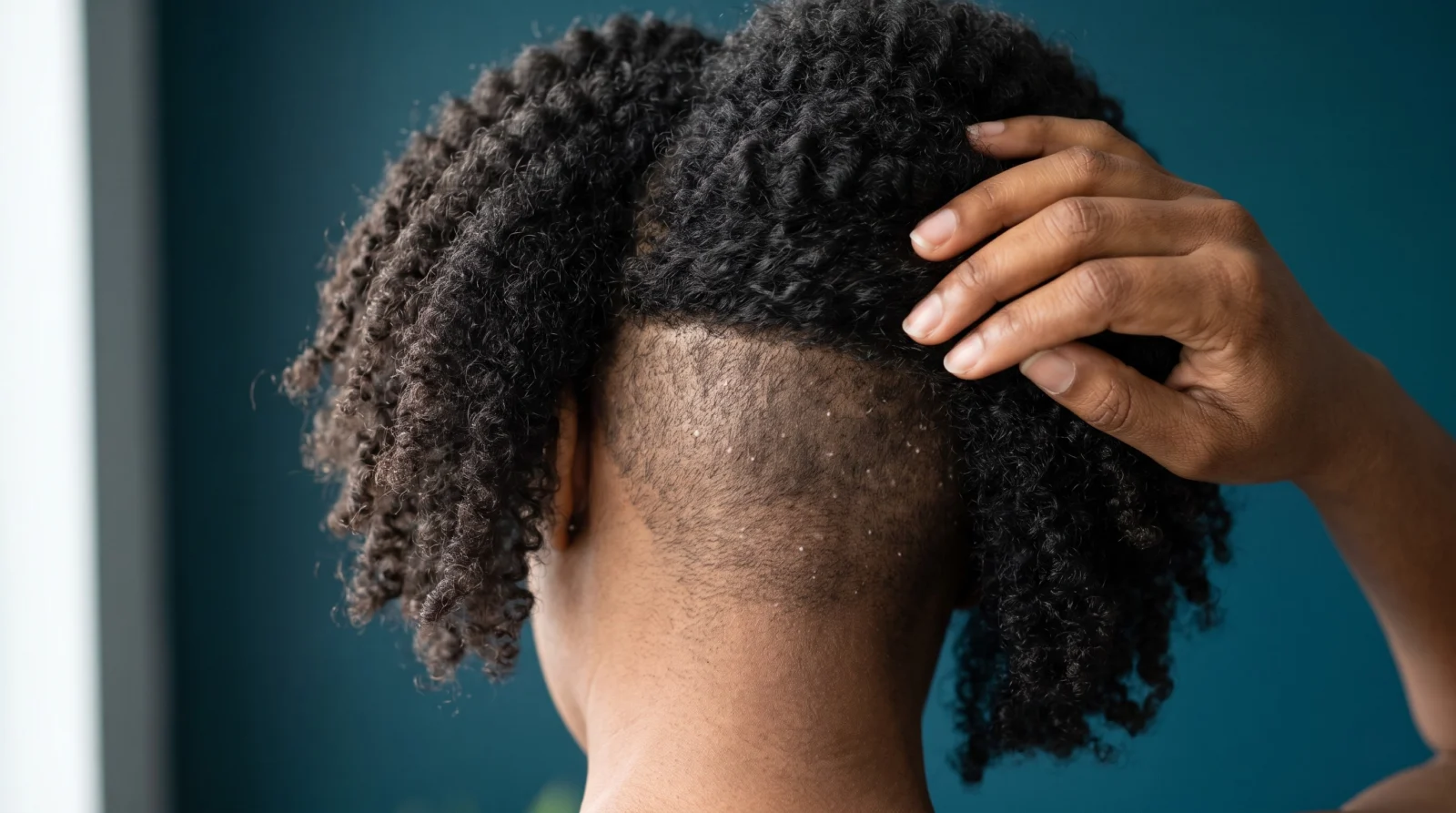
By the end of the second week, crusting and obvious redness often diminish, although color can remain longer in some skin tones. Short regrowth helps camouflage the area over the following weeks. Altered sensation may improve more slowly because small skin nerves need time to settle.
This timeline is a planning range, not a promise. The broader hair transplant recovery timeline explains how donor healing fits alongside shedding and later growth in the recipient area.
| Stage | Common donor-area changes | Practical planning point |
|---|---|---|
| Days 0–3 | Tenderness, pinpoint crusts, tightness | Avoid rubbing and follow the clinic’s cleansing plan |
| Days 4–7 | Itching may increase as skin closes | Do not scratch or pick at crusts |
| Days 8–14 | Crusts and redness often reduce | Ask before resuming close clipping or vigorous exercise |
| Weeks 3–6 | Short regrowth improves coverage | Mild numbness or sensitivity may still be settling |
| Later months | Texture and color continue to normalize | Review persistent changes with the operating surgeon |
What should the donor area look like while healing?
A normally progressing donor area is expected to change rather than look identical each day. Early pinpoint marks should become drier and less conspicuous, while tenderness should trend downward. Mild itch can accompany skin repair, but appearance alone cannot confirm that healing is normal.
According to a Frontiers in Medicine review (2026), recognized donor-site concerns after follicular unit excision include pigment change, raised scarring, cysts, and excessive donor depletion. The paper reviewed literature through September 2025, but it did not provide one incidence rate that applies to every patient.
Extraction planning matters because the donor supply is limited. Spacing, punch choice, hair caliber, density, and future loss can affect whether the area looks even after clipping. This is also why FUE versus DHI planning should focus on the complete surgical plan rather than a marketing label.
How can you care for the donor area after a hair transplant?
Use the clinic’s written instructions, since washing and activity schedules differ. A simple process for discussion with your surgeon is:
- Protect the scalp on the first night. Keep the head position recommended by the clinic and avoid dragging the donor area across rough bedding.
- Clean only as directed. Use the approved water pressure, cleanser, and technique; pat rather than rub unless your surgeon gives different instructions.
- Leave crusts alone. Picking can reopen skin and increase irritation. Ask when gentle crust removal is appropriate.
- Limit friction and contamination. Confirm when hats, clippers, helmets, swimming, and intense exercise can safely resume.
- Use only approved products. Do not add antiseptics, oils, or active scalp products without checking with the surgical team.
- Photograph changes consistently. Similar light and angle make it easier to show the clinic whether redness or swelling is improving.

The hair and hairline topic hub collects related planning and recovery guides. It can help you build questions, but your operating team should provide the instructions for your procedure.
When should you contact your surgeon about the donor area?
Contact the clinic promptly if pain, redness, warmth, swelling, or drainage is increasing rather than easing. Fever, spreading redness, persistent bleeding, a rapidly enlarging tender area, or an unexpected medication reaction also warrants timely professional advice; urgent symptoms need urgent local care.
Patchy visibility soon after surgery does not automatically mean permanent overharvesting because short hair, lighting, swelling, and temporary shedding can alter the view. However, a sharply thinned pattern that remains concerning should be assessed in person rather than judged from social-media photographs.
A board-certified surgeon can compare the current appearance with operative records and baseline images. Avoid self-diagnosis from a single close-up, especially when the scalp is freshly clipped.
What should you ask before surgery about donor recovery?
Ask how the surgeon defines your safe donor zone, estimates long-term donor capacity, and distributes extractions. Discuss whether your hair characteristics or expected future loss change the plan, and request written guidance for washing, sleep, work, exercise, sun exposure, and haircuts.
According to the International Society of Hair Restoration Surgery (2025), 95% of first-time surgical patients reported by participating members in 2024 were ages 20–35. The survey had a ±5.4 percentage-point margin of error, so it describes respondents rather than every clinic; it still highlights why long-term donor conservation deserves attention in younger adults.
Review natural hairline design together with donor supply, because a lower or denser target may use more grafts. You can also open the live hair transplant preview to understand the visualization concept before discussing realistic limits with a qualified professional.
The app provides an AI visualization on your own photo to help you prepare questions for a consultation with a qualified professional — not medical advice and not a prediction of results. Use it to organize questions, not to decide candidacy or graft numbers.
FAQ
How long is the donor area red after a hair transplant?
Redness often fades substantially within 7–14 days, but skin tone, technique, and individual healing can extend that range. Ask your surgeon if redness is worsening or accompanied by heat, drainage, or increasing pain.
When can I sleep on the donor area?
Follow the operating clinic’s specific instructions, particularly during the first nights. Ask when direct pressure and your usual sleep position are acceptable for your procedure.
Will hair grow back in the donor area?
The follicles removed for transplantation do not regrow in their original spots, while the hair left between extraction sites continues growing. Careful spacing is intended to preserve a visually even appearance.
When can I get a haircut after a hair transplant?
Timing depends on healing and the cutting method. Get your surgeon’s approval before using close clippers or allowing pressure and friction over the donor zone.
AI previews are visualizations, not medical advice.
Sources & further reading
- Hair transplant — American Society of Plastic Surgeons
- Hair transplants — American Academy of Dermatology
- International Society of Hair Restoration Surgery — ISHRS
- Patient safety — American Society of Plastic Surgeons
- Find a board-certified plastic surgeon — American Board of Plastic Surgery
- Cosmetic procedures — NHS
Written by the Plastic Surgery AI editorial team. Educational information only, not medical advice; always talk to a board-certified surgeon. Our editorial policy.

