Upper Blepharoplasty Recovery Timeline
Upper blepharoplasty recovery timeline: learn what to expect from swelling and stitches to work, exercise, scar care, and final healing.
On this page
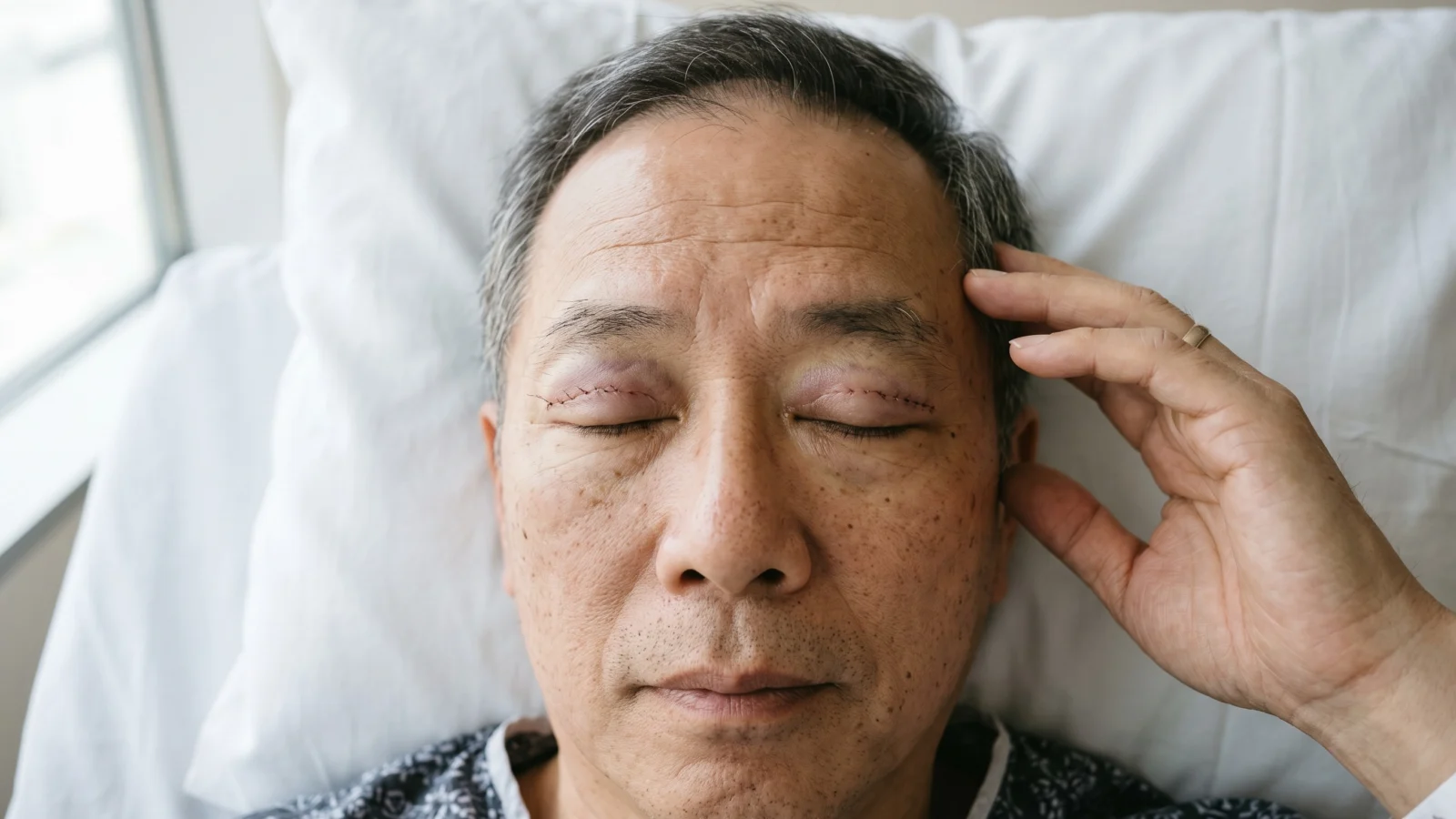
An upper blepharoplasty recovery timeline usually involves the most visible swelling and bruising during the first week, a gradual return to public activities around 10 to 14 days, and continued scar softening over several months. Your surgeon’s technique, healing pattern, and instructions can shift every milestone.

What is the upper blepharoplasty recovery timeline?
Most people should plan for a quiet first week, expect noticeable improvement during the second week, and treat the eyelids as healing tissue for several months. This is a planning range, not a promise: the operation may differ in extent, and combining procedures can change the schedule.
| Stage | Common changes | Practical planning |
|---|---|---|
| Days 0–2 | Swelling, tightness, watering, mild blur from ointment | Rest with the head raised; follow the prescribed compress and eye-care plan |
| Days 3–7 | Bruising may remain obvious; swelling often begins to ease | Keep follow-up appointments and avoid rubbing the lids |
| Days 7–14 | Sutures may already be removed, depending on technique; discoloration fades | Many people feel ready for desk work when vision is comfortable |
| Weeks 3–6 | Residual puffiness and pink incision lines may persist | Reintroduce activities only on the surgeon’s schedule |
| Months 2–6 | Fine scars generally flatten and soften | Continue sun protection and attend review visits |
According to the American Society of Plastic Surgeons’ 2025 statistics, eyelid surgery ranked fifth among cosmetic surgical procedures reported by its member surgeons. The same 2025 report says eyelid surgery was the most favored procedure in the age-66-and-older group, while noting that its figures reflect participating US members rather than every patient or country.
If your concern may come from brow position rather than lid skin alone, read how clinicians distinguish upper blepharoplasty from a brow lift before setting expectations. A qualified surgeon should assess the brow, lid crease, eye closure, dryness history, and visual symptoms together.
What happens during the first week after upper blepharoplasty?
The first week is mainly about protecting the incision, limiting swelling, and watching vision. The American Society of Plastic Surgeons’ recovery guidance lists temporary swelling, bruising, irritation, dry eyes, and discomfort among expected early experiences.
During the first 24 to 48 hours, use only the cold-compress method your surgical team recommends. A very cold pack placed directly on thin eyelid skin can cause injury, while heavy pressure can disturb healing tissue.
Sleep on your back with the head raised if your surgeon approves. Extra elevation can make rest more comfortable, but it does not replace medication instructions or clinical follow-up.
Temporary blur may come from ointment or tearing, but do not assume every visual change is routine. Ask in advance which symptoms require an urgent call and which contact number works outside office hours.
Bruising often changes color as it resolves. Symmetry may also vary from one side to the other early on because swelling is rarely identical.
How should you care for upper eyelids at home?
Use your own discharge instructions as the controlling plan. A safe, simple routine can be organized into these steps:
- Wash your hands first. Touch the eye area only when your care instructions require it.
- Use prescribed products exactly as directed. Do not add over-the-counter drops, creams, or supplements without approval.
- Keep pressure off the lids. Avoid rubbing, pulling at crusts, or testing the incision in a mirror.
- Protect the eyes outdoors. Sunglasses can reduce wind and bright-light discomfort; use sun protection around healed skin as directed.
- Track changes once daily. A brief note about swelling, comfort, and vision is more useful than repeatedly checking every hour.
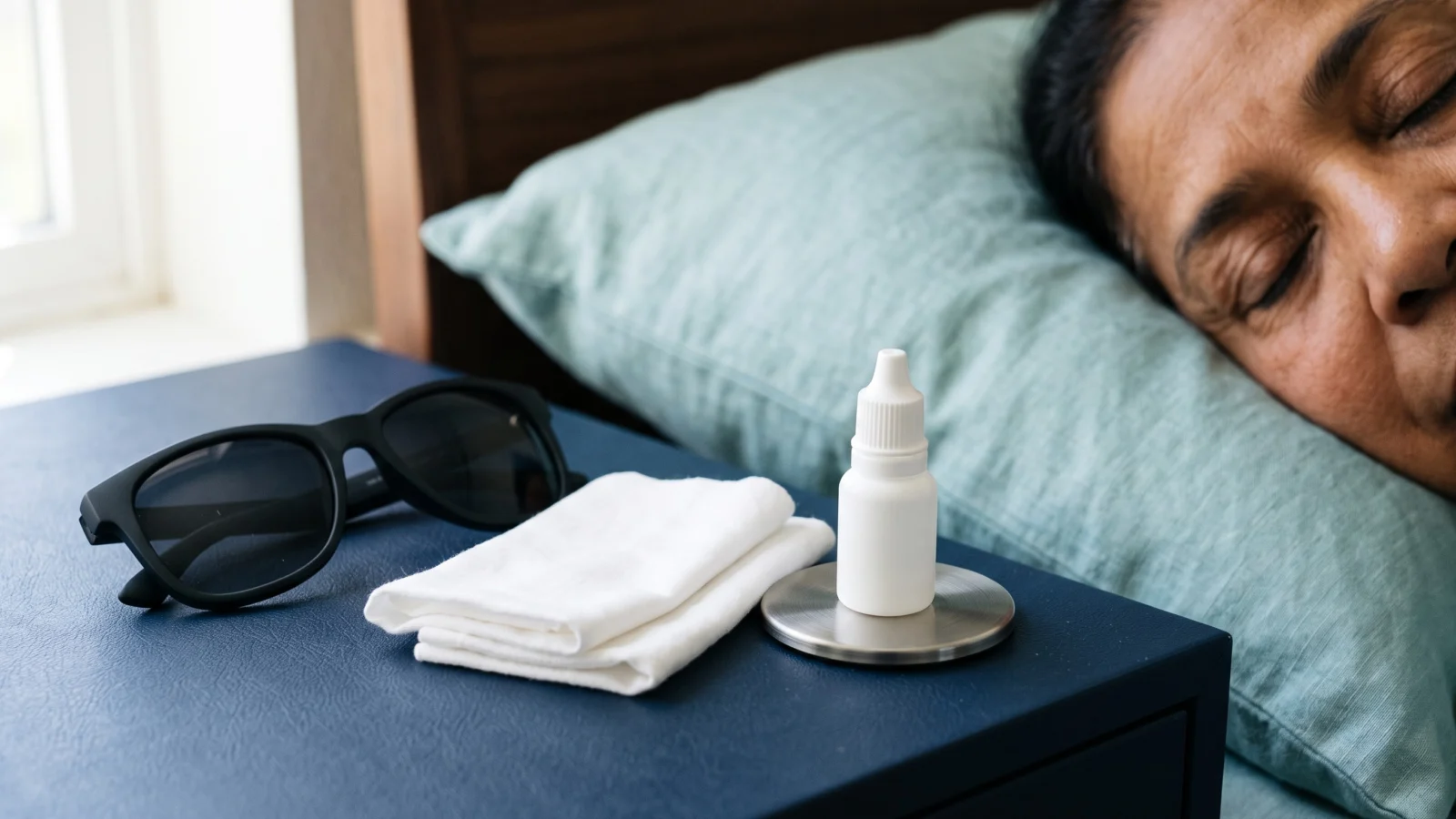
The NHS eyelid surgery guidance, reviewed in 2023, says puffy or numb lids, irritation, watering, bruising, and temporary difficulty closing the eyes can occur. Its page also notes that irritated or watery eyes may last a few weeks; national guidance cannot account for your operation, so your surgeon’s directions remain primary.
For broader preparation and evidence-based questions, the eyes and brows topic hub collects related guides. You can also review a consultation preparation checklist before the operation so transport, time off, prescriptions, and help at home are arranged early.
When can you return to work, exercise, and contacts?
Many people consider desk work after roughly 7 to 14 days, once vision is comfortable and they feel at ease with remaining bruising. Work involving dust, heat, physical exertion, or public-facing duties may need a different plan.
Driving should wait until vision is clear, sedating medicine is no longer needed, and the surgical team has cleared it. Being able to open the eyes does not automatically mean reaction time or visual comfort is adequate.
Walking is often encouraged early, but bending, straining, swimming, and vigorous exercise commonly stay restricted longer. Ask for written dates tied to your actual operation rather than relying on a generic calendar.
Contact lenses may irritate the healing eye area. Use glasses until your surgeon confirms that lens insertion and removal will not pull the lids or worsen dryness.
An upper-eyelid visualization may help you describe a conservative or more noticeable aesthetic goal, but it cannot show healing speed, scar behavior, or clinical suitability. The app provides an AI visualization on your own photo to help you prepare questions for a consultation with a qualified professional — not medical advice and not a prediction of results.
What warning signs need urgent attention?
Call your surgical team urgently for sudden or worsening vision loss, severe eye pain, rapidly increasing one-sided swelling, active bleeding that does not stop, or symptoms your discharge sheet marks as urgent. If you cannot reach the team, use the emergency pathway they gave you or seek local emergency care.
Increasing redness, warmth, discharge, fever, a wound that opens, or pain that worsens rather than settles also deserves prompt clinical advice. Do not post a photo online and wait for strangers to interpret it.
A board-certified plastic surgeon or appropriately credentialed eyelid specialist can explain personal risks, especially when dry eye, thyroid eye disease, blood-thinning medicine, or previous eye surgery is relevant. This guide is general education and cannot diagnose a complication.
FAQ
How long does swelling last after upper blepharoplasty?
Swelling is often most noticeable in the first several days and improves substantially over two weeks, but mild residual puffiness can take longer. Your surgeon can explain what fits the extent of your procedure.
When are upper eyelid stitches removed?
Removal timing depends on the suture and technique, but it is commonly discussed at a visit within the first week. Never remove or trim a suture yourself unless your surgical team explicitly instructs you.
When can I wear eye makeup again?
Wait until the incision is closed and your surgeon gives permission, because brushes and products can irritate healing skin. Replace or thoroughly clean applicators before reuse.
Will upper blepharoplasty scars disappear?
Incisions placed in the natural lid crease often become less conspicuous as they mature, but no surgical scar disappears completely. Pinkness and firmness can continue changing for several months.
Can an AI preview predict my upper eyelid result?
No. AI previews are visualizations, not medical advice and not a prediction of results.
Sources & further reading
- Eyelid surgery (blepharoplasty) — American Society of Plastic Surgeons
- Brow lift — American Society of Plastic Surgeons
- Blepharoplasty — American Academy of Facial Plastic and Reconstructive Surgery
- Eyelid surgery — NHS
- Patient safety — American Society of Plastic Surgeons
- Find a board-certified plastic surgeon — American Board of Plastic Surgery
- Cosmetic procedures — NHS
Written by the Plastic Surgery AI editorial team. Educational information only, not medical advice; always talk to a board-certified surgeon. Our editorial policy.

