Does a Lip Lift Change Your Smile?
Does a lip lift change your smile: learn how tooth show, upper-lip movement, proportions, scarring, and consultation planning may affect the result.

On this page
Does a lip lift change your smile? It can change how much upper lip and upper tooth show are visible, especially at rest and during a gentle smile, but it does not move the teeth or guarantee a particular expression. The effect depends on anatomy, technique, healing, and the amount of skin removed.
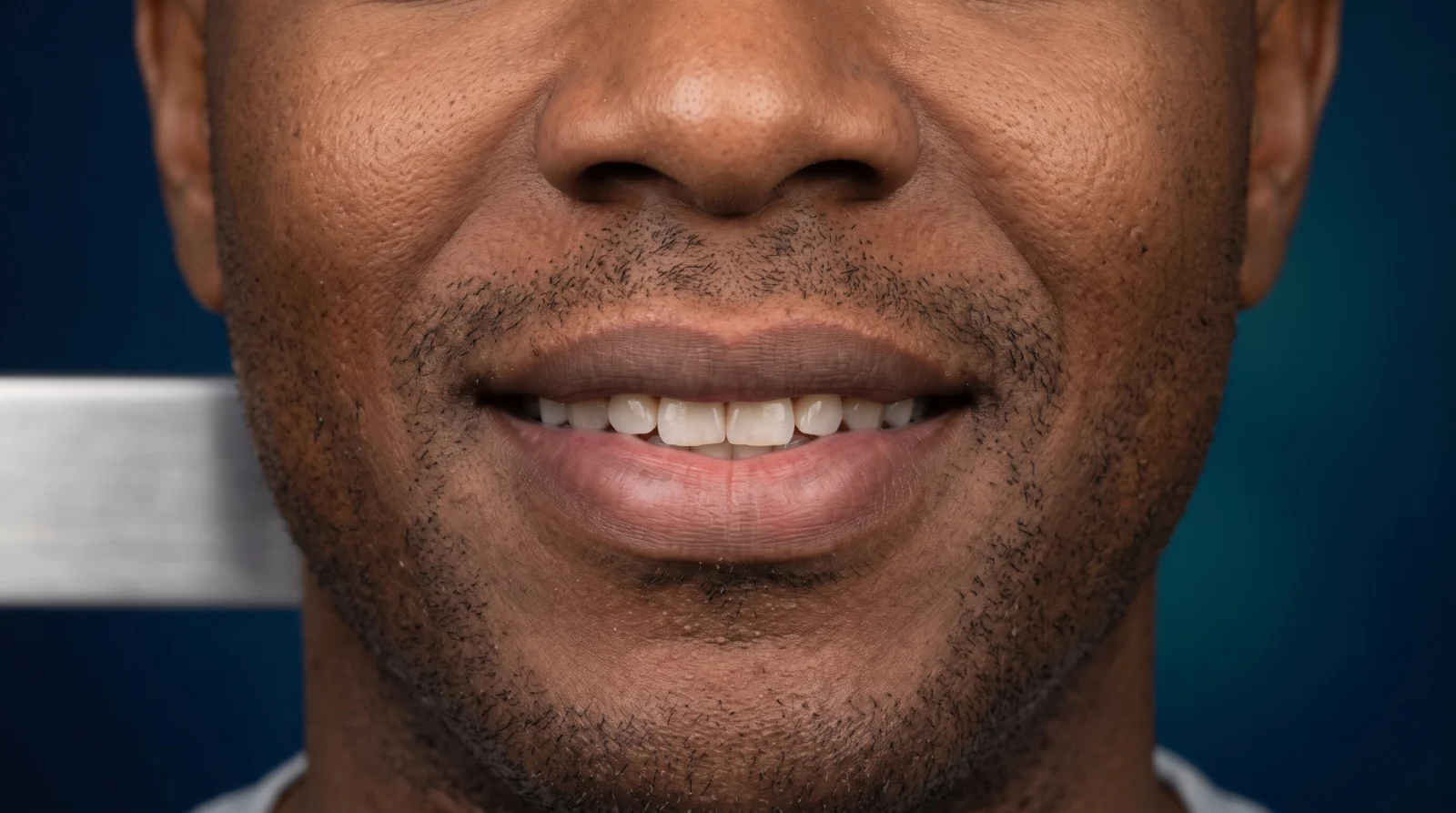
Does a Lip Lift Change Your Smile?
Yes, a lip lift can make a smile look different because it shortens the skin between the base of the nose and the upper lip. This may roll more of the pink lip outward and reveal more upper teeth. The change can be visible at rest, while speaking, and during a smile.
The operation does not redesign the teeth, alter the bite, or control the muscles that create every expression. A person with limited tooth show because of tooth position or jaw relationships may therefore need a different dental or surgical assessment. A qualified clinician should evaluate the whole lower face rather than using one facial measurement.
According to a 2022 clinical review indexed by PubMed, lip-lift planning may reduce philtrum height, increase visible upper lip, improve dental show, and influence smile proportions. That paper is a narrative review, however, so it does not establish one ideal design for every face.
How Much More Tooth Show Can a Lip Lift Create?
There is no universal target. A surgeon considers tooth show at rest and in motion, upper-lip length, lip mobility, tooth position, gum display, age, skin quality, and the relationship between the nose and mouth. More visible tooth is not automatically better; excessive elevation may look strained or expose more gum than intended.
According to a 2026 systematic review of seven studies including 1,754 patients, the studied techniques increased upper-incisor show from ranges of 1.5–2.0 mm before surgery to 3.5–5.0 mm afterward. The same review reported that average upper-lip skin length changed from 14.0–14.5 mm to 10.8–12.0 mm. Evidence quality was moderate, and varied methods prevented a pooled meta-analysis, so these ranges are context rather than a personal forecast.
A static photograph cannot show every part of this decision. Surgeons may compare a neutral face, a small smile, a full smile, and speech because the upper lip moves differently across expressions.
What Changes and What Usually Does Not?
A useful consultation separates likely visual changes from features that the procedure does not directly treat.
| Feature | Possible change after a lip lift | Usually not changed directly |
|---|---|---|
| Upper-lip skin | Shorter distance below the nose | Nose position |
| Pink lip show | More visible upper-lip surface | Natural lip muscle strength |
| Tooth show | More upper teeth may show at rest or smiling | Tooth size, alignment, or shade |
| Cupid’s bow | May look more defined through eversion | Bite or jaw relationship |
| Smile | Proportions may look more open | Personality or habitual expression |
This distinction is why lip lift versus lip enhancement is not simply a question of which option creates “more lip.” The approaches change different anatomical features, with different limits and recovery considerations.
What Should You Compare Before a Consultation?
Start with the concern you actually notice. Is it a long-looking space below the nose, limited upper tooth show at rest, a thin visible upper lip, or a smile relationship involving teeth and gums? These are not interchangeable goals.
Use this five-step preparation process:
- Take consistent photos. Capture neutral, gentle-smile, and full-smile views in even light, without tilting the head.
- Write one or two priorities. Describe the visible relationship you want assessed rather than naming a fixed amount of skin removal.
- Record dental context. Bring information about prior dental work, bite concerns, or planned smile treatment.
- Ask about movement. Request an assessment at rest, while smiling, and while speaking.
- Discuss trade-offs. Ask about scar position, asymmetry, gum show, closure tension, revision policy, and the clinician’s experience with your anatomy.
The lip lift recovery timeline explains why early swelling can temporarily change lip height, smile movement, and tooth show. Do not judge the final relationship from the first days or from a single photograph.
According to a 2026 retrospective study of 600 women treated with two related subnasal techniques, mean follow-up was 14.6 months; 11 patients had minor scar elevation and no surgical revisions were reported. The study was retrospective, included only women, and assessed one technique family, so its findings cannot predict an individual outcome.

How Can You Preview Smile Proportions Responsibly?
A smile design preview can help you notice tooth show, lip line, and facial balance before writing consultation questions. It cannot reproduce tissue tension, muscle movement, scar healing, or the clinical examination needed to decide whether any procedure is appropriate.
The app provides an AI visualization on your own photo to help you prepare questions for a consultation with a qualified professional — not medical advice and not a prediction of results. Compare a neutral view with a natural smile, and treat any image as a communication aid rather than an outcome promise.
For broader context, the lips and smile topic hub collects guides on lip proportions, dental appearance, recovery, and consultation planning. If the teeth themselves are central to your goal, the guide to how long veneers last can help separate dental questions from upper-lip questions.
Consult a board-certified surgeon with relevant facial experience and, when tooth position or gum display matters, a qualified dental professional. A coordinated assessment is more useful than choosing a procedure from one measurement or trend.
FAQ
Does a lip lift always show more teeth?
No. It often increases upper-tooth show, but the amount depends on lip length, mobility, technique, tooth position, and healing.
Can a lip lift make a smile look unnatural?
An overly aggressive change, unsuitable planning, or healing issues may create an unwanted relationship between the lip, teeth, gums, and nose. Conservative goals and an in-person assessment help frame realistic trade-offs.
Does a lip lift change the shape of the teeth?
No. It changes upper-lip position and visible proportions; it does not change tooth shape, alignment, shade, or the bite.
When can I judge my smile after a lip lift?
Early swelling and stiffness can distort the smile, so the first days are not representative. Follow your surgeon’s timeline and ask when movement and scar maturation can be assessed meaningfully.
AI previews are visualizations, not medical advice.
Sources & further reading
- Dermal fillers — American Society of Plastic Surgeons
- Dermal fillers — NHS
- Veneers — American Dental Association (MouthHealthy)
- Facelift — American Society of Plastic Surgeons
- Chin surgery — American Society of Plastic Surgeons
- Cheek augmentation — American Society of Plastic Surgeons
- Buccal fat removal — American Society of Plastic Surgeons
- Facelift — NHS
- Patient safety — American Society of Plastic Surgeons
- Find a board-certified plastic surgeon — American Board of Plastic Surgery
- Cosmetic procedures — NHS
Written by the Plastic Surgery AI editorial team. Educational information only, not medical advice; always talk to a board-certified surgeon. Our editorial policy.

