Hair Transplant Hairline Design: What Looks Natural?
Hair transplant hairline design explained: learn how height, density, direction, donor supply, and temple shape create a natural-looking result.

On this page
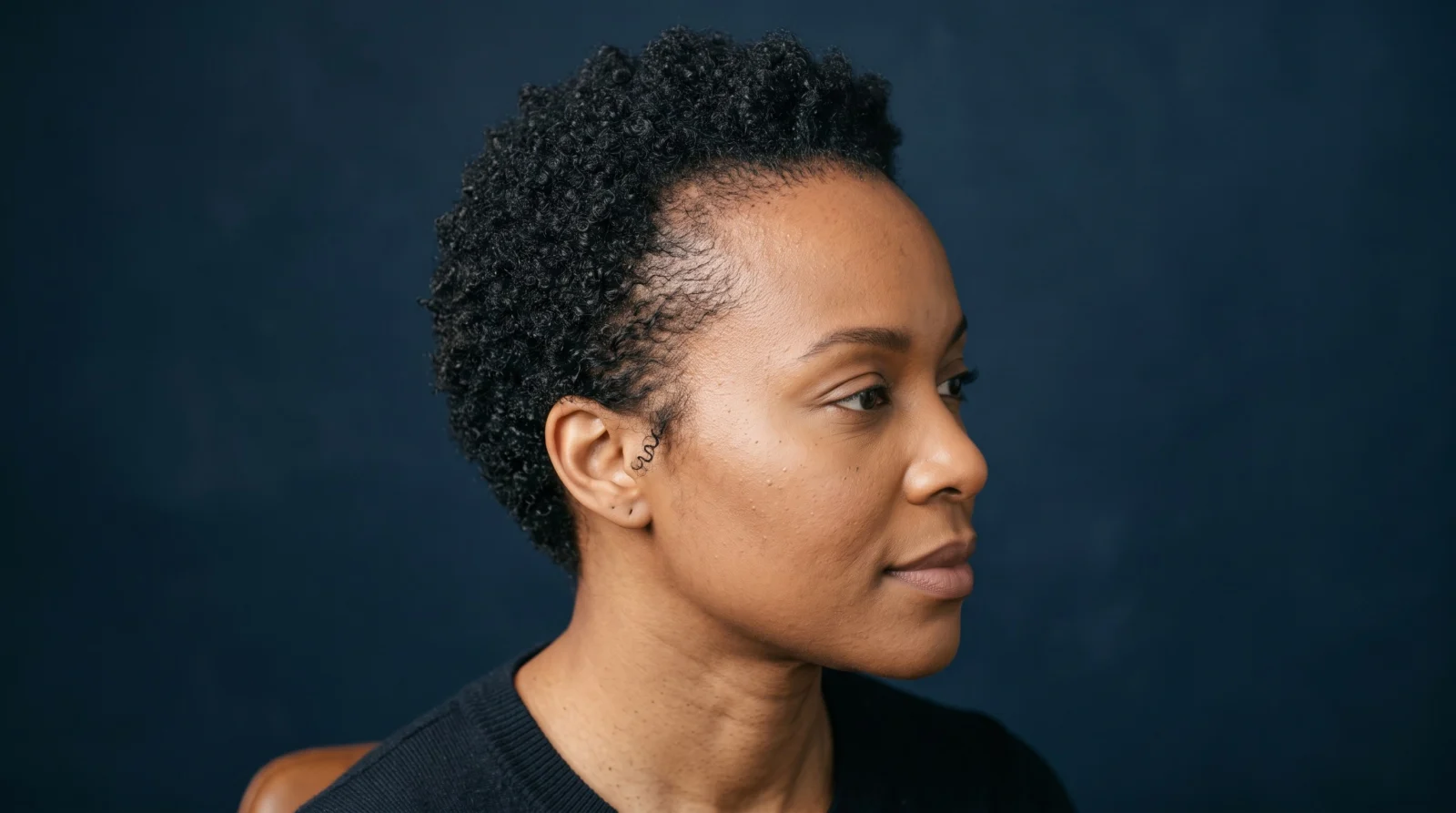
Hair transplant hairline design should create a believable frame for the face, not simply place the lowest or straightest possible line. A natural plan considers age, existing loss, donor supply, forehead proportions, temple shape, hair caliber, curl pattern, and the direction in which each graft will grow.
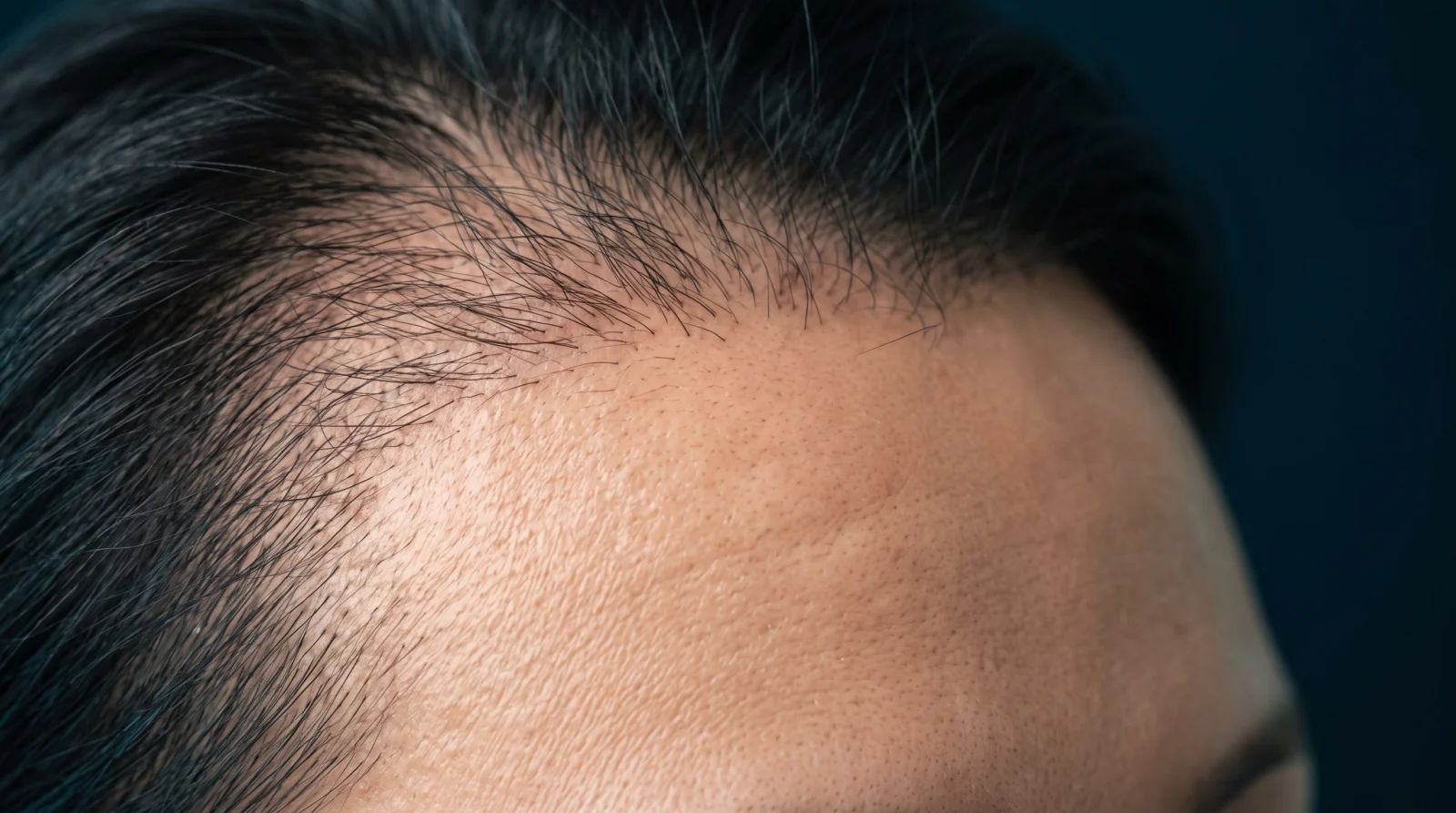
Hair transplant hairline design: what looks natural?
A natural-looking hairline is usually soft at the front, subtly irregular, and denser behind the leading edge. It also fits the person’s present features and remains plausible if surrounding hair continues to thin.
This is why design matters as much as the extraction method. The American Academy of Dermatology explains that modern transplantation can look natural because hairs are moved in small units, while emphasizing that results still depend heavily on the clinician selected. Its hair transplant guidance also notes that candidacy requires enough healthy donor hair and the ability to grow hair in the recipient area.
A low, ruler-straight line can consume limited grafts and may look less convincing with age. By contrast, a mature shape can preserve donor supply for density behind the front or for future change. “Natural” therefore means coherent and sustainable, not perfectly symmetrical.
How is a natural hairline planned?
A clinician normally plans from the face, scalp, and likely pattern of future loss rather than copying a celebrity photo. The process should happen before surgery, with enough time for you to view and question the proposed outline.
- Confirm the cause and stability of loss. A scalp assessment comes first because different patterns may require different management. Surgery should not replace an appropriate medical evaluation.
- Assess the donor area. Hair caliber, curl, contrast with skin, density, and safe long-term supply affect how much visual coverage is realistic.
- Set a conservative central point. Forehead proportions and age help guide position, but no universal distance works for every face.
- Shape the corners and temples. The design should connect naturally with remaining hair rather than forming an isolated arc.
- Plan direction and angle. Frontal hairs generally emerge at acute angles and change direction toward the temples. Placement must respect the person’s existing pattern.
- Allocate density in zones. Fine single-hair grafts may soften the front; density is built progressively behind it rather than appearing as a hard wall.
- Review several views. Examine the proposal from the front, both three-quarter views, and profile. Ask how it might look with styling and future thinning.
A facial profile analysis guide can help you think about proportion without treating any ratio as a prescription. A hair transplant preview may also help you compare conservative hairline concepts before a consultation, but it cannot show graft survival or predict a surgical result.
Which details keep a hairline from looking artificial?
The strongest designs reproduce variation rather than drawing a uniform border. The front should contain changes in spacing, caliber, direction, and depth that are visible in an untreated hairline.
According to Kim and colleagues (2025), natural hair-growth direction can be asymmetric, and assuming perfect left-right symmetry may work against a natural design. This was an anatomic observational paper rather than an outcomes trial, so it informs planning but does not prove that one pattern suits every patient.
| Design variable | Natural-looking principle | Useful consultation question |
|---|---|---|
| Leading edge | Fine, irregular transition rather than a solid line | Which grafts will be used at the very front? |
| Height | Appropriate for age, proportions, and donor limits | How would a lower line affect long-term supply? |
| Corners | Gradual recession or rounding that fits the face | What happens if my existing hair thins behind this area? |
| Direction | Follows local growth angle and temple flow | How will you match my curl and exit angle? |
| Density | Builds behind the edge and accounts for hair characteristics | Where will limited grafts create the most visible coverage? |
Technique labels alone do not answer these questions. The archive’s FUE vs DHI hair transplant comparison explains how harvesting and placement workflows differ, but either approach still requires sound distribution, direction, and donor planning.
Does a higher graft count create a better hairline?
No. Graft count describes a resource, not design quality, and more grafts do not automatically create a more natural or safer plan. The useful number depends on the area, hair characteristics, donor capacity, desired density, and whether future sessions may be needed.
According to the International Society of Hair Restoration Surgery (2022), 68% of surveyed members reported averaging one procedure per patient in 2021 to achieve the desired result, compared with an estimated 3.4 procedures in 2019. The survey represented participating physicians and had a reported ±6.1% margin of error, so it should not be read as a promise that one session is enough for an individual.
Ask for the estimate in follicular units, the expected distribution by zone, and the assumptions behind it. A responsible plan should explain what is not being treated and how donor reserves are protected.
Time matters too. The AAD says many patients see results at six to nine months, while some need 12 months. The hair transplant recovery timeline provides a practical month-by-month view of shedding, early growth, and maturation; the hair topic hub gathers related planning and recovery guides.
What should you ask before approving a hairline?
Bring clear photos of your current hair from the front, above, temples, and donor area. Older photographs can show your earlier pattern, but they should be context rather than a demand to recreate an adolescent line.
Ask the clinician to draw the proposal while you are upright, then inspect it in neutral lighting. Discuss whether ongoing loss is expected, how that affects the area behind the transplant, and what alternatives exist if donor supply cannot support your preferred density.
Request examples that resemble your hair texture, caliber, skin-to-hair contrast, and loss pattern. Confirm who designs the line, who creates recipient sites, who performs extraction, and which steps are delegated. Seek a qualified, board-certified surgeon with specific hair-restoration experience and credentials appropriate to your country.
You can use the app once to visualize different hairline heights and shapes on the same photograph. Keep the comparison conservative and take it to the consultation as a communication aid, not an instruction or outcome forecast.
FAQ
What makes a transplanted hairline look natural?
A soft irregular edge, fine hairs at the front, appropriate height, realistic temple contours, and growth angles that follow existing hair all contribute. Long-term donor planning is as important as the outline seen on surgery day.
How low should a hair transplant hairline be?
There is no universal measurement. Position should be individualized to age, facial proportions, loss pattern, hair characteristics, and donor capacity by an experienced surgeon.
Are perfectly symmetrical hairlines natural?
Not necessarily. Small differences in contour and growth direction are common, so forcing exact mirror symmetry can look less organic than respecting existing anatomy.
Can an AI preview predict my final density?
No. A preview can compare visual concepts, but it cannot measure donor quality, graft survival, healing, continued loss, or the technical choices made during surgery.
When will the final hairline be visible?
Early shedding and gradual regrowth mean the appearance changes over months. Many people see substantial growth by six to nine months, while maturation may take 12 months or longer; follow the timeline given by your own clinician.
AI previews are visualizations, not medical advice.