Microneedling for Acne Scars: What to Expect
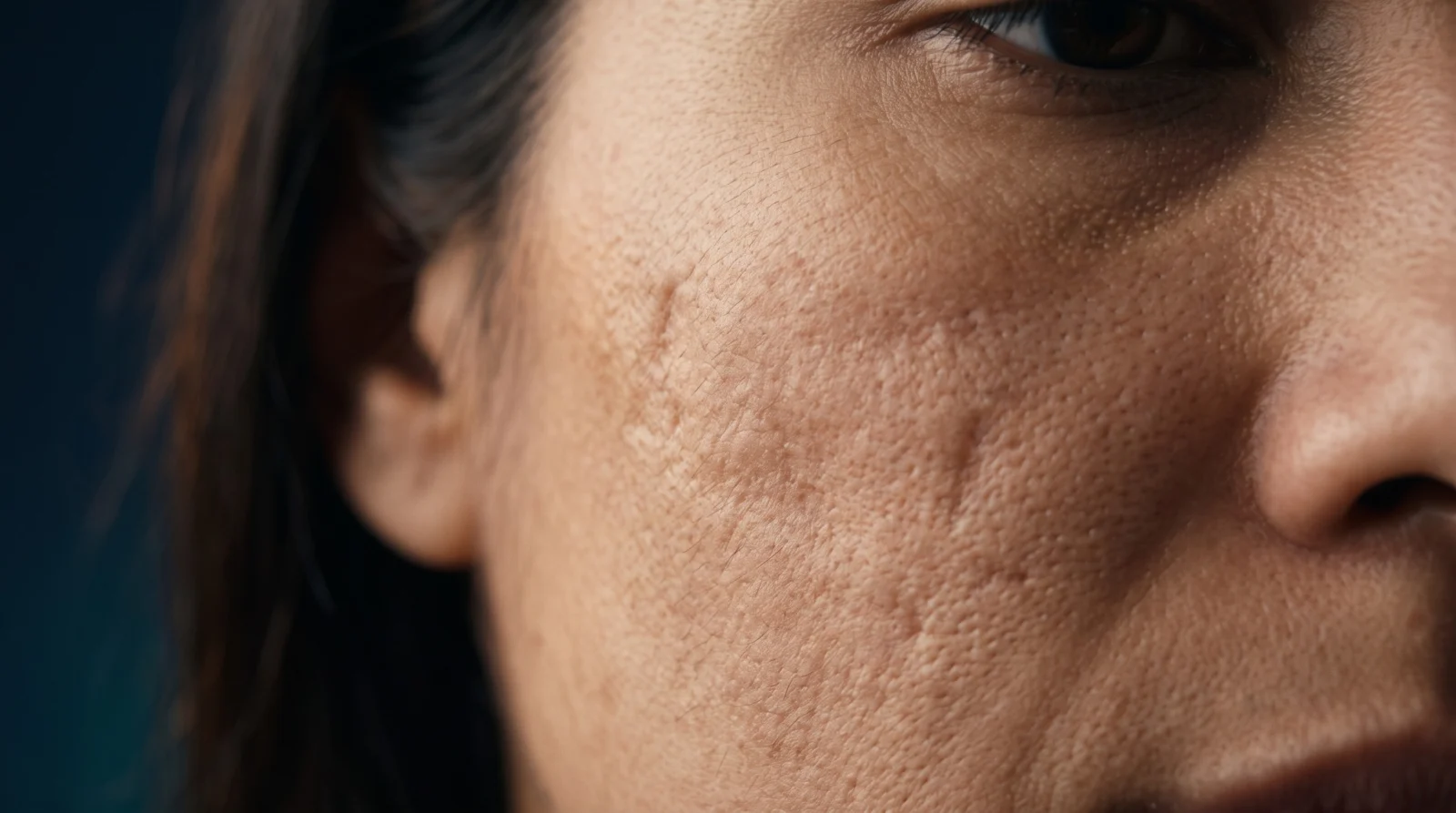
Microneedling for acne scars uses fine needles to create controlled micro-injuries that prompt the skin to rebuild collagen and remodel scar tissue over months. It works best on soft, indented (atrophic) scars, usually needs several sessions, and changes texture gradually rather than instantly. A dermatologist assessment should come first.
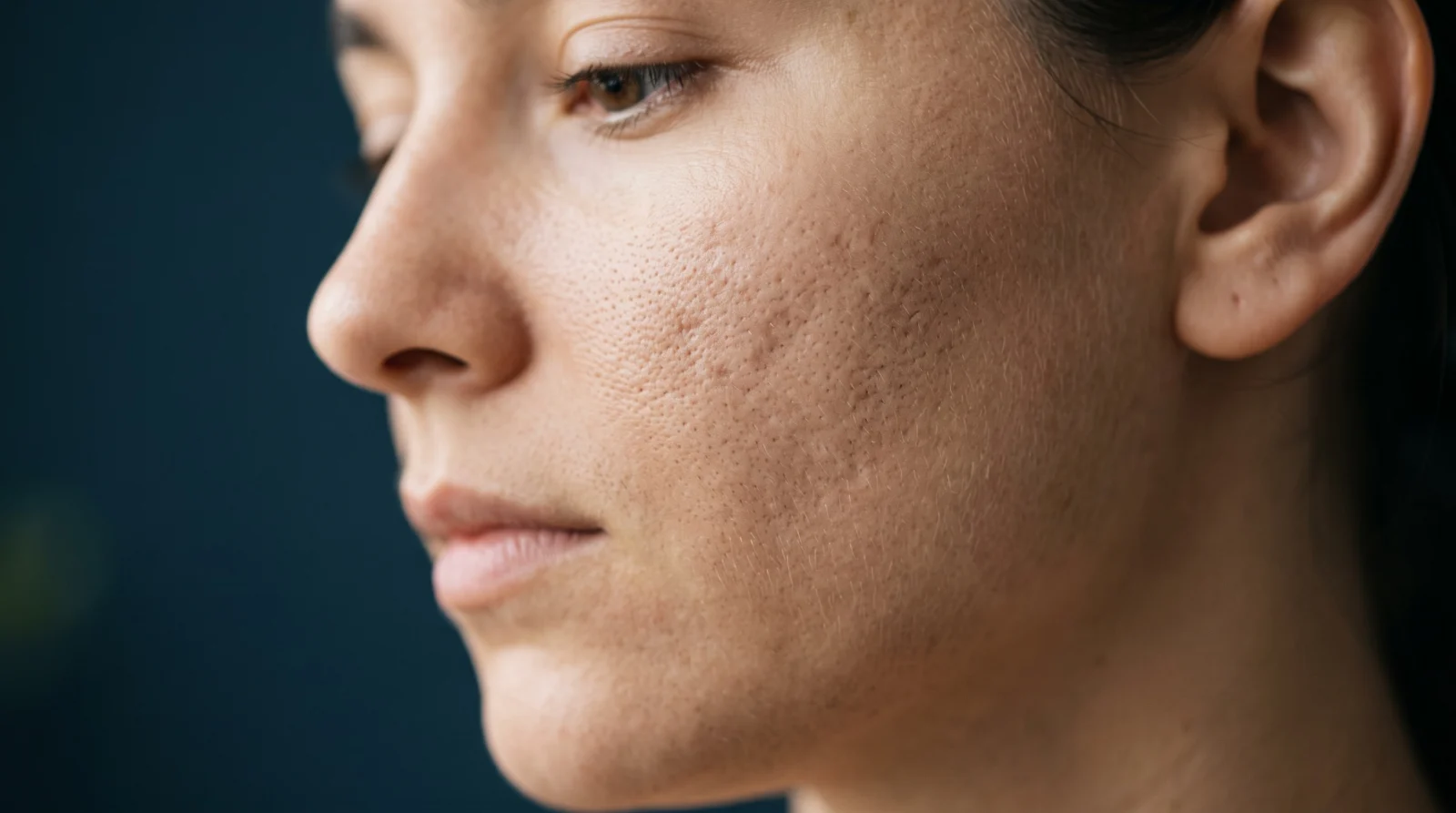
What is microneedling for acne scars?
Microneedling, also called percutaneous collagen induction, passes very fine needles through the upper layers of skin to a controlled depth. Each tiny channel triggers a wound-healing response: the skin releases growth factors, forms new collagen and elastin, and slowly reorganizes the fibers that make a scar look tethered or sunken.
Because the process depends on your own healing, the change is progressive. Most people notice smoother texture and softer scar edges over weeks to months, not days. It is a resurfacing-adjacent approach that treats the scar's foundation rather than only its surface.
According to Aust and colleagues (2008) in Plastic and Reconstructive Surgery, percutaneous collagen induction increased collagen and elastin deposition in treated skin, which is the mechanism clinicians rely on for scar remodeling; note that early studies were small and often lacked large control groups. You can review that foundational paper on PubMed.
Which acne scars respond best?
Not all acne scars behave the same way, and matching the scar type to the tool matters more than the brand of device.
Atrophic (indented) scars
Rolling and shallow boxcar scars—broad, soft depressions—tend to respond most predictably because needling can loosen tethering and stimulate fill-in from beneath. Deeper, sharply defined "ice-pick" scars usually need combination approaches and set expectations accordingly.
Scars microneedling is less suited to
Raised (hypertrophic or keloid) scars are a different problem and are generally not first candidates for needling. Active, inflamed acne, cold sores, or skin infections should be settled before any treatment. This is why a professional exam, not a self-diagnosis, decides candidacy.
The American Academy of Dermatology notes that improving acne scars typically requires a series of treatments and realistic expectations, since scars are softened rather than erased; see the AAD overview on acne scar treatment.
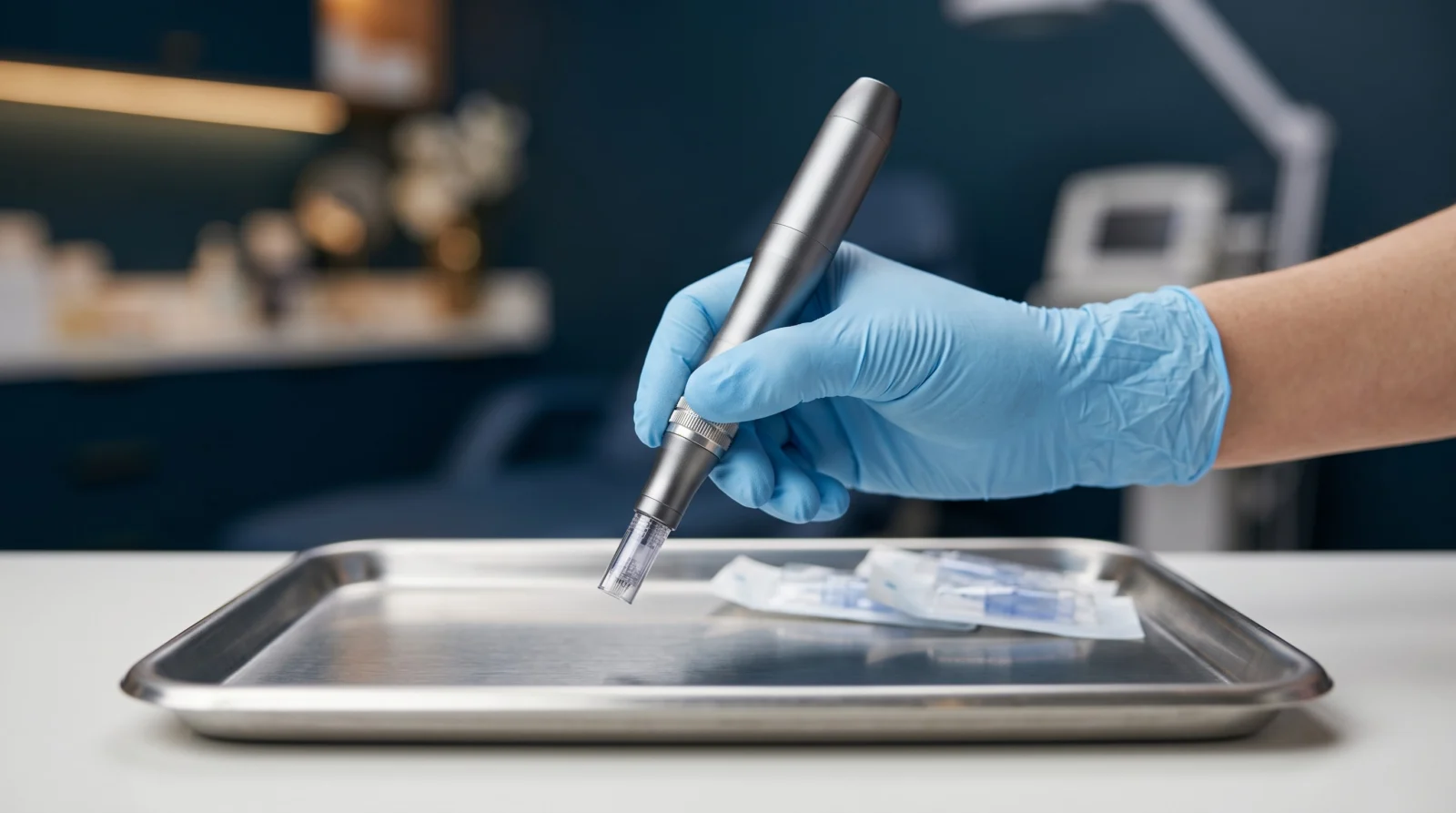
How many sessions does microneedling for acne scars take?
Most clinicians plan a course rather than a single visit. A common protocol is three to six sessions spaced roughly four to six weeks apart, giving skin time to build collagen between treatments.
- Consultation and mapping. Your scar types are assessed and a plan and needle depth are chosen for your skin.
- Preparation. The area is cleaned and a topical numbing cream is usually applied for comfort.
- Treatment pass. The device is moved across each region until a controlled endpoint (often light pinpoint redness) is reached.
- Recovery window. Redness and mild swelling settle over one to three days for most people.
- Repeat and reassess. Sessions are repeated on schedule, and progress is reviewed as collagen matures over three to six months.
Fabbrocini and colleagues (2009), writing in Clinical and Experimental Dermatology, reported that a course of skin needling improved the appearance of atrophic acne scars in their patient group; as with much of this literature, the sample was modest, so individual results differ. The study is indexed on PubMed.
How microneedling compares with other scar options
Microneedling is one tool among several, and many plans combine methods. The table below frames the trade-offs at a glance.
| Approach | Best suited to | Typical downtime | Notes |
|---|---|---|---|
| Microneedling | Rolling and shallow boxcar scars | ~1–3 days redness | Series needed; collagen builds gradually |
| Chemical peel | Surface tone and shallow texture | Varies by depth | Depth determines recovery and results |
| Laser resurfacing | Texture and deeper remodeling | Longer for ablative | More downtime, often stronger effect |
| PRP add-on | Supporting overall healing | Minimal alone | Often paired, not a standalone scar fix |
If you are weighing energy- and acid-based resurfacing, our guide to chemical peels versus laser resurfacing breaks down how depth changes both downtime and outcome. For gentler, maintenance-style facials, the comparison of a HydraFacial and a chemical peel explains what surface treatments can and cannot do for scarring.
Some clinics layer platelet-rich preparations with needling to support recovery. Our overview of PRP and PRF for facial rejuvenation covers what that evidence does and does not show, so you can ask grounded questions.
Safety, downtime, and choosing a provider
Microneedling is generally well tolerated in trained hands, but it is still a medical procedure. Sterile, single-use needle cartridges and appropriate depth control reduce the risk of infection and unwanted pigment changes, especially in richly pigmented skin.
Expect redness resembling a mild sunburn for a day or two, possible light flaking, and temporary sensitivity. Rare risks include infection, prolonged redness, and post-inflammatory pigmentation. Home "derma-roller" devices carry higher infection and injury risk and cannot match professional depth control, so clinic-based treatment is safer for scars.
DermNet's clinician-reviewed overview of skin needling is a useful primary reference on technique, aftercare, and contraindications. Whatever you read, confirm candidacy with a board-certified dermatologist who examines your skin in person.
Before a consultation, it can help to understand your own scar pattern and skin type. You can explore a general skin analysis to organize your questions, and the Plastic Surgery AI app lets you visualize skin-focused concepts on your own photo so you arrive with clearer goals.
Aftercare that protects your results
Good aftercare protects the collagen you are trying to build. For the first day or two, keep the skin clean, avoid active acids and retinoids until your clinician says otherwise, and skip strenuous sweating that can irritate fresh channels.
Sun protection is essential, because healing skin is more prone to pigment changes. Daily broad-spectrum sunscreen and shade support even, predictable results between sessions.
Give the process time. Because collagen remodeling unfolds over months, the smoothest results often appear well after your final session, which is why patience and a complete series usually outperform a single rushed treatment.
FAQ
How long does it take to see results from microneedling for acne scars?
Early smoothing can appear within a few weeks, but meaningful scar softening usually develops over three to six months as new collagen matures across a full series of sessions.
Is microneedling painful?
Most people describe mild scratching or vibration rather than sharp pain, because a topical numbing cream is typically applied first. Some tenderness and redness afterward are normal.
How many microneedling sessions will I need for acne scars?
Many plans use three to six sessions spaced roughly four to six weeks apart, though your dermatologist tailors the number to your scar type, skin, and response.
Can microneedling remove acne scars completely?
No. Microneedling softens and improves the look of many atrophic scars but rarely erases them, and deeper ice-pick scars often need combined treatments for the best outcome.
Is at-home microneedling safe for acne scars?
Home rollers carry higher risks of infection, injury, and uneven results, and they cannot match professional depth control, so clinic-based treatment supervised by a dermatologist is safer.
AI previews are visualizations for education and planning, not medical advice, diagnosis, or a promise of results. Always consult a board-certified dermatologist or surgeon about your individual skin.