Cheek Implant Recovery Timeline: Week by Week
Cheek implant recovery timeline explains swelling, eating, work, exercise, and healing milestones from the first week through final settling.

On this page
A cheek implant recovery timeline usually begins with visible swelling, tightness, and a modified routine during the first week, followed by a gradual return to work and normal activity over several weeks. The cheeks can look fuller than the intended result at first, so final contour should not be judged early.
Cheek Implant Recovery Timeline: At a Glance
Recovery is not identical for everyone. The surgical approach, implant position, whether the incision is inside the mouth or near the lower eyelid, and any combined facial procedure can change the schedule.
A useful planning range is:
| Stage | What you may notice | Practical planning |
|---|---|---|
| First 72 hours | Swelling, pressure, mild bruising, cheek tightness | Rest with the head elevated and follow the prescribed care plan |
| Days 4–7 | Swelling may remain obvious; chewing or smiling can feel tight | Choose easy-to-eat foods if advised and keep social plans flexible |
| Week 2 | Bruising often fades and everyday comfort improves | Some people return to desk-based work, depending on swelling and job demands |
| Weeks 3–6 | Residual fullness and altered sensation can continue to settle | Activity often increases gradually after surgical clearance |
| Months 2–6 | Contour becomes easier to evaluate as deeper swelling resolves | Review symmetry and implant position at scheduled follow-ups |
The American Society of Plastic Surgeons recovery guidance says healing continues for several weeks as swelling decreases. That broad wording matters: a calendar can help you plan, but your surgeon's instructions take priority over a generic milestone.
What Happens Week by Week After Cheek Implants?
The first week is usually about protecting the surgical area rather than assessing appearance. Swelling may be uneven, and a firm or unusually prominent cheek can reflect early tissue response rather than the settled contour.
Days 1–3: protect and rest
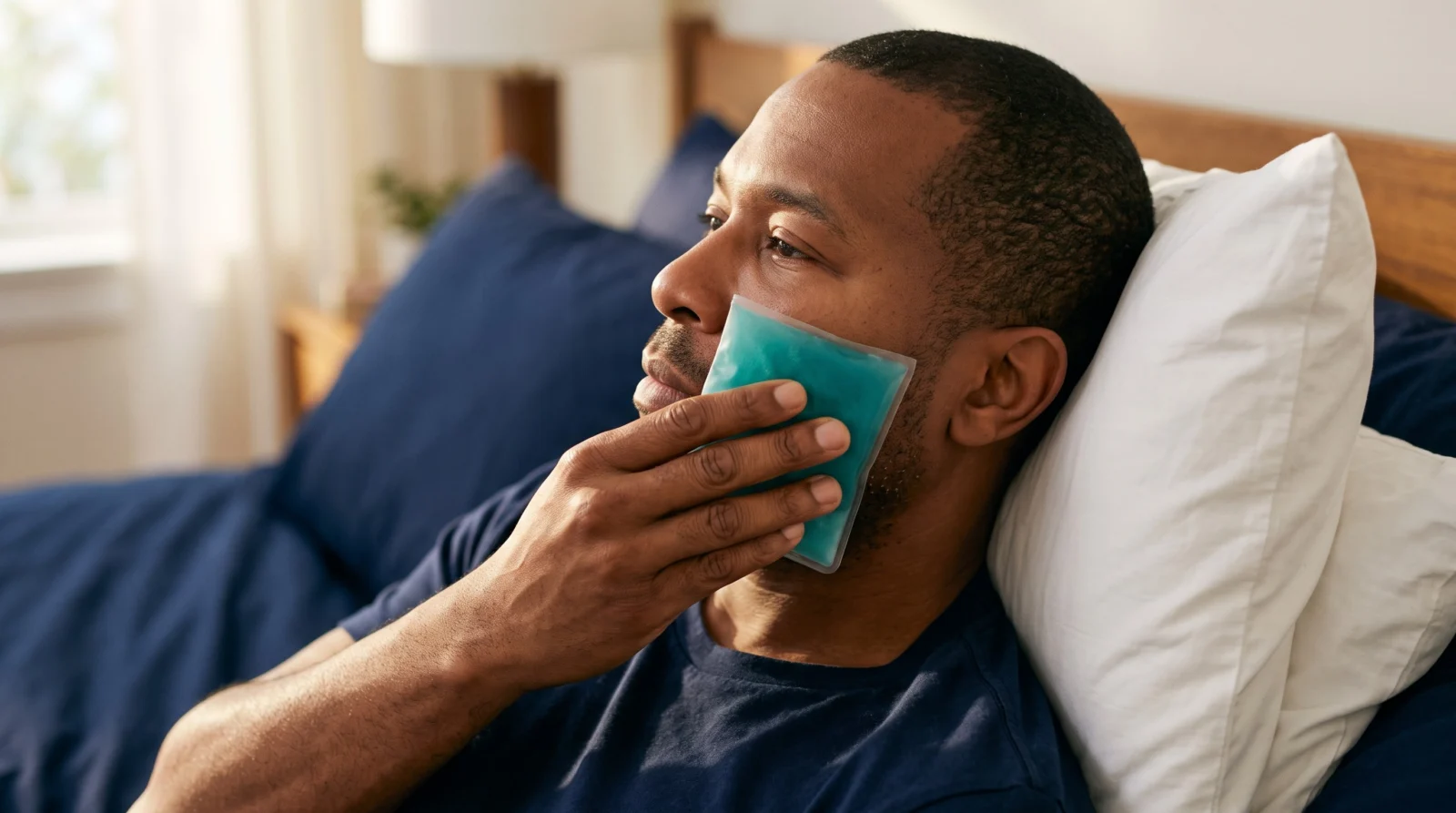
Plan for quiet recovery, reliable help, and an elevated sleeping position. Use cooling only in the way your surgical team recommends, because direct pressure, excessive cold, or a heavy pack may not be appropriate for every incision and implant position.
If the incision is inside the mouth, your surgeon may provide specific oral-care instructions and may temporarily recommend softer foods. Do not improvise with rinses, skin products, or medicines that were not approved for you.
Days 4–7: swelling is still part of the picture
Tightness while smiling and tenderness with chewing can still affect daily life. Keep work, video calls, and important events flexible because visible swelling is often more relevant than pain when deciding whether you feel ready to be seen.
Week 2: function often improves before contour settles
Many people feel more capable of routine tasks by the second week, but that does not mean the cheeks have reached their final shape. Ask your surgeon whether your work environment, commute, lifting requirements, or exposure to accidental contact changes your return date.
Weeks 3–6 and beyond: gradual settling
Residual swelling, firmness, or numbness can take longer than the most visible bruising. Progress is better judged across consistent photos and follow-up examinations than by checking the mirror repeatedly under different lighting.
What Helps Cheek Implant Recovery Go Smoothly?
The most useful recovery plan is simple, written, and specific to your operation. These steps can organize it without replacing medical instructions:
- Confirm the incision-care plan. Ask whether the incision is external or inside the mouth and what cleaning routine applies.
- Set up elevated rest. Arrange pillows or a supportive wedge before surgery so you are not building a sleep setup while tired.
- Prepare suitable meals. Follow the surgeon's guidance on texture, temperature, and chewing rather than assuming a special diet is required.
- Clarify activity limits. Get separate dates for walking, driving, desk work, lifting, and exercise because “normal activity” is too vague.
- Record the contact pathway. Keep the office's daytime and after-hours numbers with the warning signs your team wants reported.
- Attend every review. Implant position, incision healing, sensation, and swelling are assessed more reliably in person than in a selfie.
For broader planning, the face-contouring topic hub gathers related guides, while this comparison of cheek fat transfer and cheek implants explains how the methods differ before recovery even begins.
What Is Normal, and When Should You Call Your Surgeon?
Expected healing and a complication can overlap in how they first feel, so a personal post-operative instruction sheet is essential. Common early experiences may include swelling, mild bruising, tightness, temporary altered sensation, and some asymmetry as each side settles at a different rate.
Call the surgical team promptly for the warning signs listed in your own discharge instructions. These commonly include rapidly increasing one-sided swelling, worsening redness, drainage, fever, escalating pain, a new change in vision, breathing difficulty, or concern that the implant has shifted. Urgent symptoms require urgent care rather than online reassurance.
According to a 2025 systematic review and meta-analysis, 48 studies included 3,701 patients and reported a pooled 7.4% complication rate for malar implants. The authors also reported high statistical heterogeneity, so that figure should not be treated as an individual's predicted risk.
According to a separate systematic review of facial implant materials (2025), 117 studies covered 4,273 patients and found an overall 4.4% complication rate among studies that evaluated complications. Its evidence mixed reconstructive and aesthetic settings, materials, and follow-up periods, which limits direct application to one cheek operation.
These findings support a practical conclusion: discuss the surgeon's own experience, implant material, fixation approach, follow-up schedule, and revision policy rather than relying on one headline percentage. Consult a board-certified surgeon who can explain how your health and procedure plan affect risk.
How Can You Prepare for Follow-Up and Final Results?
Bring a short written record of symptoms, medicines, eating comfort, sleep, and activity to each appointment. Date-stamped photos taken in the same location and light can help document broad changes, but they cannot confirm implant position or diagnose a problem.
Avoid comparing an early swollen face with a goal photo. A better consultation question is: “Which features should improve first, and when will you assess the contour rather than temporary swelling?” The midface lift recovery timeline is also useful for understanding why different midface operations should not share the same calendar.
Before a consultation, you can review face-focused options on the procedure explorer. The app can help you visualize and describe a preferred cheek balance, while this guide to facial profile analysis can help turn a vague goal into clearer questions.
FAQ
How long does cheek implant swelling last?
The most visible swelling often improves over the first few weeks, while smaller changes can continue for months. Your surgeon should define when your own result is stable enough to evaluate.
When can I return to work after cheek implants?
Desk-based work may be possible sooner than a physical or public-facing role, but visible swelling and job demands matter. Ask for an individualized date and build flexibility into your schedule.
When can I exercise after cheek implants?
Walking and strenuous exercise usually return on different schedules. Resume each activity only after your surgeon clears it, especially where lifting, impact, bending, or contact is involved.
Can early cheek asymmetry be normal?
Uneven swelling can create temporary asymmetry, particularly early in healing. New, worsening, painful, or persistent asymmetry should be assessed by the surgical team.
AI previews are visualizations, not medical advice.