Lip Lift vs Lip Enhancement: How to Choose

Lip lift vs lip enhancement comes down to the feature you want to change: a lift shortens the skin between the nose and upper lip, while enhancement changes lip volume or contour through another approach. The better fit depends on anatomy, permanence, recovery, scarring, and your priorities—not a universal ideal.

Lip Lift vs Lip Enhancement: What Is the Difference?
A lip lift is an operation that removes a small amount of skin beneath the nose. The surgeon raises the upper lip, which can shorten a long-looking philtrum, reveal more pink lip, and sometimes increase upper-tooth show at rest. It changes position and proportion rather than simply making the lip larger.
“Lip enhancement” is a broader goal, not one procedure. It can include surgical methods that add lasting structure, fat transfer, or temporary non-surgical options. Those approaches mainly seek more volume, definition, or projection; they do not reliably shorten the distance between the nose and lip.
The right comparison therefore starts with the visible concern. If the issue is vertical distance or limited tooth show, adding volume may not address it. If the lip position already suits the face but looks thin, a lift may create the wrong kind of change.
| Question | Lip lift | Other lip-enhancement approaches |
|---|---|---|
| Main change | Upper-lip position and philtrum length | Volume, outline, or projection |
| Longevity | Intended to be long-lasting | Temporary or long-lasting, depending on method |
| Incision | Usually hidden along the base of the nose | Depends on the selected method |
| Recovery | Swelling, incision care, and scar maturation | Varies widely by method |
| Best evaluation | Full-face proportions, tooth show, lip movement | Existing shape, desired volume, and tissue quality |
| Key tradeoff | Permanent anatomy change and a scar | Maintenance, unpredictability, or method-specific risks |
A facial profile analysis can help organize the same question in a wider context, because the lips are read alongside the chin, nose, teeth, and lower face.
Which Option Changes Lip Shape Without Just Adding Volume?
A lip lift changes shape without relying on added volume. By moving the upper-lip border upward, it can create greater pink-lip visibility and alter the curve of the cupid’s bow, although the degree of change depends on anatomy and technique.
That distinction matters when someone says, “I want more upper lip.” They may mean more visible pink lip, a shorter space beneath the nose, stronger projection, a clearer border, or more fullness. Those are different goals and should not be treated as interchangeable.
A surgeon should assess the face at rest and while smiling. Tooth show, dental position, lip closure, asymmetry, prior procedures, nasal-base width, and the quality of the skin all affect planning. There is no single “ideal” philtrum length that fits every age, sex, or ethnic background.
You can use the live lip enhancement preview to explore visual language for a consultation. A preview can help you say “more visible upper lip” or “subtle contour,” but it cannot determine the operation, amount of skin removal, or medical suitability.
How Do the Procedure and Recovery Compare?
The practical difference is that a lip lift has a defined surgical recovery, while enhancement recovery depends entirely on the chosen method. After a lift, swelling and tightness are expected early, sutures are commonly removed on the surgeon’s schedule, and the scar continues to change for months.
For a more detailed sequence, the lip lift recovery timeline explains early swelling, return-to-work planning, scar care, and longer-term settling. Individual instructions take priority because technique, healing history, and combined procedures can change the timeline.
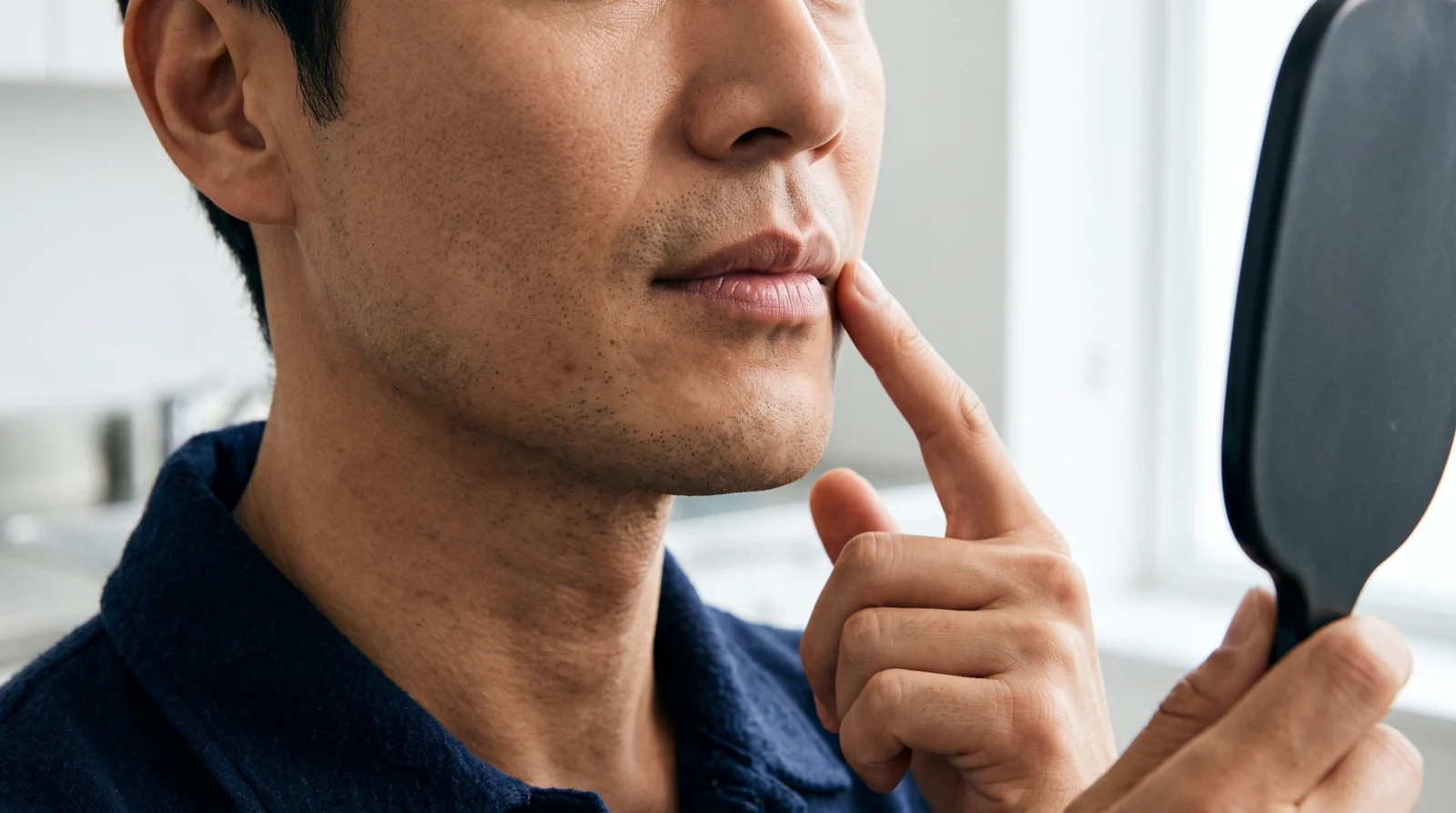
Long-lasting enhancement methods can also involve surgery and downtime. Temporary non-surgical options generally involve less initial recovery, but they require maintenance and carry their own limitations and risks. “Less downtime” does not automatically mean “better” or “safer” for a particular person.
A lift also creates an incision where the upper lip meets the nasal base. Surgeons plan that line to sit in a natural crease, but no scar can be promised to disappear. Pigment change, widening, firmness, asymmetry, altered nostril shape, infection, and dissatisfaction should all be discussed before consent.
What Does 2026 Research Say About Lip Lifts?
According to a systematic review in the Journal of Cosmetic Dermatology (2026), seven studies included 1,754 patients, reported mean satisfaction of 4.4 out of 5, and found revision rates ranging from 0.6% to 6.7%. The authors rated the overall evidence as moderate, and the varied methods prevented a meta-analysis.
The same review reported that studied techniques generally shortened measured philtral length and increased visible pink-lip height and upper-incisor show. Those averages describe study groups; they are not targets or predictions for an individual face.
According to a retrospective study in Aesthetic Plastic Surgery (2026), 600 women treated with two tissue-supporting subnasal techniques had a mean follow-up of 14.6 months; 11 had minor scar elevation, and none required surgical revision. The study is limited by its retrospective design, all-female sample, and focus on one technique family, so it should not be read as a universal complication estimate.
Research can frame informed questions, but it cannot replace an examination. Consult a board-certified surgeon with relevant facial-procedure experience, ask to see consistently photographed results, and discuss how the surgeon handles scars, asymmetry, revisions, and changes in tooth show.
How Should You Choose Between the Options?
Use a goal-first process rather than choosing from a trend or a single edited photo:
- Name the exact change. Decide whether you are concerned about philtrum length, visible pink lip, tooth show, outline, projection, or overall volume.
- Collect consistent photos. Bring relaxed front, three-quarter, profile, and smiling views in neutral light; avoid close phone-camera distortion.
- Compare permanence and upkeep. Ask what is reversible, what needs maintenance, and what a revision could involve.
- Discuss recovery honestly. Include work, speaking, eating, exercise, sun protection, incision care, and important events on your calendar.
- Verify qualifications and setting. Confirm board certification, facility accreditation, emergency arrangements, and experience with your proposed technique.
- Review alternatives. A responsible consultation should explain whether doing nothing, choosing another method, or waiting would better match your priorities.
The guide on preparing for a plastic surgery consultation offers a fuller checklist for medical history, medications, photographs, costs, and follow-up care.
The app can visualize a conservative lip change on your own photo once, helping you prepare descriptive questions rather than asking for an exact copied result. Keep the unedited original beside any visualization so proportions and camera effects remain clear.
FAQ
Is a lip lift the same as lip enhancement?
No. A lip lift changes upper-lip position and shortens the skin below the nose, while lip enhancement is a broad goal that may involve changing volume, contour, or projection through several methods.
Does a lip lift make lips look bigger?
It can make more of the upper pink lip visible, so the lip may look fuller without added volume. The visual effect depends on baseline anatomy, tooth show, and the amount of movement planned.
How long do lip lift results last?
A surgical lift is intended to be long-lasting, although the face continues to age. Ask your surgeon how technique, scar behavior, and future changes may affect the result.
What should I ask at a consultation?
Ask which feature the proposed method changes, where any incision sits, what recovery involves, what outcomes are realistic, and how complications or dissatisfaction are managed. Consult a board-certified surgeon for an individualized assessment.
AI previews are visualizations, not medical advice.