Under Eye Bag Surgery: Options and What to Expect
Under eye bag surgery explained: compare lower eyelid options, candidacy, recovery, risks, and consultation questions before deciding.

On this page
Under eye bag surgery usually means lower blepharoplasty, an operation that removes, repositions, or conserves tissue beneath the lower eyelids to soften persistent puffiness and the lid-cheek transition. The right approach depends on whether the main issue is protruding fat, loose skin, support, or a combination, so an in-person examination matters.
It cannot correct every shadow or skin-color difference, and no ethical surgeon can guarantee a perfectly smooth result. This guide explains the main options, candidacy questions, recovery, and limits to discuss with a board-certified surgeon.

What is under eye bag surgery?
Under eye bag surgery is lower eyelid surgery designed to address persistent bags beneath the eyes. A surgeon may remove a conservative amount of protruding fat, reposition it toward a hollow, trim limited loose skin, or combine these steps while protecting eyelid support.
Temporary morning puffiness is different from a stable contour caused by anatomy and aging. Allergies, sleep, fluid shifts, skin quality, and pigmentation can also influence how the area looks. Surgery changes structure; it does not treat every cause of a tired appearance or every dark circle.
According to the American Society of Plastic Surgeons 2025 statistics report, 118,978 eyelid operations were recorded in 2025, up 19% from 2024. That total combines upper and lower procedures, so it does not show demand for lower-eyelid surgery alone, but it supports the strong current interest in eyelid evaluation.
If you are preparing for an appointment, the site's eyes and brows topic hub places this guide alongside related eyelid and brow resources.
Which lower eyelid approach addresses which concern?
The incision and tissue plan are individualized. A transconjunctival approach places the incision inside the lower eyelid and is commonly considered when fat pockets need treatment without meaningful excess skin. A skin-side approach places an incision just below the lashes and may be considered when skin adjustment is part of the plan.
| Approach | Typical focus | Important limit |
|---|---|---|
| Inside-lid incision | Protruding fat with little loose skin | Does not remove external skin |
| Skin-side incision | Fat plus selected skin adjustment | Requires careful support and scar planning |
| Fat repositioning | Blending a bag with a nearby hollow | Contour and healing remain individual |
| Combined support steps | Eyelid position or laxity concerns | Adds complexity and must match the examination |
Fat conservation matters because aggressive removal can create a hollow look. In a 2024 systematic review of fat grafting and repositioning for lower-eyelid contour, researchers analyzed 33 studies involving 4,671 patients. The studies varied in technique and quality, limiting direct comparisons, so the result is evidence to discuss rather than a prescription for one method.
For a visual overview of the broader healing period, read the site's lower blepharoplasty recovery timeline.
Who may be a candidate for under eye bag surgery?
A potential candidate generally has stable lower-eyelid bags, realistic goals, and health that permits elective surgery. Professional eye-health guidance notes that eyelid surgery can address bags but also requires medical evaluation and an informed discussion of risks.
A consultation should assess skin, fat distribution, the lid-cheek junction, eye prominence, eyelid tone, tear production, previous eye procedures, medications, and conditions that may affect healing. Dry-eye symptoms deserve specific discussion because surgery around the eyelids can temporarily change comfort.
Bring clear photographs showing how the area changes across lighting and time of day. The article on upper eyelid recovery is useful if both upper and lower lids are being discussed, but the operations have different goals and plans.
An eyelid surgery preview can help organize aesthetic questions, but it cannot evaluate support, eye health, or candidacy. The app offers an AI visualization on your own photo to help you prepare questions for a consultation with a qualified professional — not medical advice and not a prediction of results.
What happens before and during the procedure?
The process should move from diagnosis to a conservative plan rather than from a preferred technique to every patient.
- Document the concern. Note whether the visible issue is a bag, a hollow, loose skin, color, temporary swelling, or several features together.
- Complete an eye-area assessment. The surgeon checks lid position, support, closure, surface symptoms, asymmetry, and relevant health history.
- Agree on a tissue plan. Ask what will be removed, preserved, or repositioned and why that choice fits your anatomy.
- Review anesthesia and aftercare. Confirm the setting, responsible clinicians, medications, transport, follow-up schedule, and urgent contact route.
- Follow the written plan. Instructions about medicines, smoking, cleansing, food, and arrival vary; use the directions from your own surgical team.
According to a 2025 systematic review, researchers examined 36 articles on lower blepharoplasty complications and found an overall low complication profile, while still calling for more rigorous comparisons between techniques. That limitation is important: “low” does not mean zero, and individual risk depends on anatomy, health, technique, and aftercare.
How long is recovery after under eye bag surgery?
Visible swelling and bruising are often most noticeable early and then improve gradually, but the schedule is not identical for everyone. The ASPS recovery guidance advises following surgeon-specific instructions and protecting the eyes during healing.
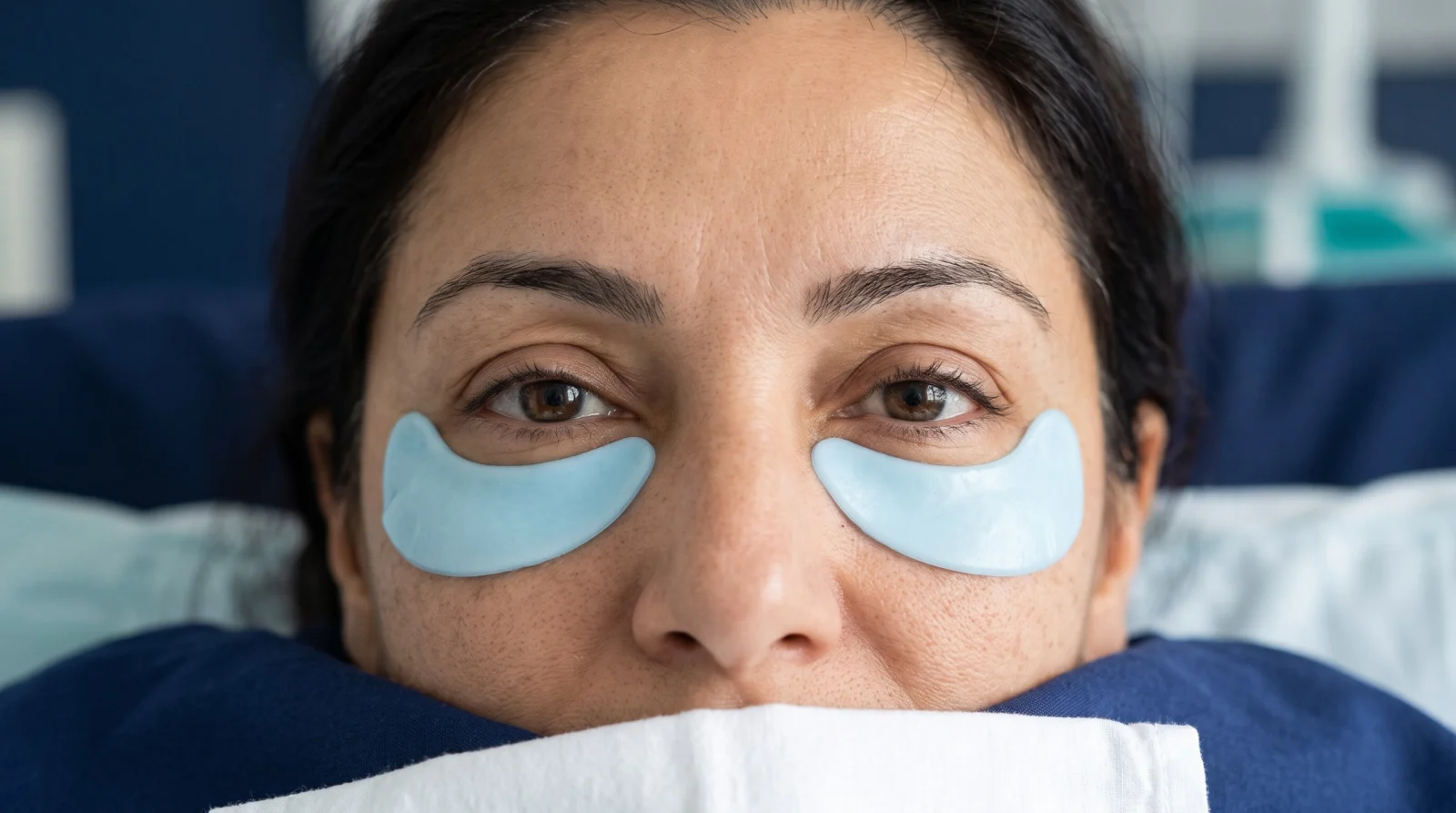
Plan practical help for the first days, keep follow-up appointments, and use only the compresses, drops, ointments, or medicines your clinician approves. Do not press directly on healing eyelids unless instructed.
Many people need social downtime while discoloration settles. Residual swelling, firmness, sensitivity, or temporary visual symptoms may last longer than the first outward phase. Final contour should be judged after healing has matured, not from an early photograph.
Contact the surgical team promptly for symptoms outside the written expectations. Sudden vision change, severe or increasing pain, marked one-sided swelling, heavy bleeding, breathing difficulty, or other urgent symptoms require immediate medical attention according to the emergency plan you were given.
FAQ
Does lower eyelid surgery remove dark circles?
It may soften a shadow caused by a bag or hollow, but pigment, visible vessels, and skin quality may remain. Ask the surgeon to identify which component appears structural and which is unlikely to change with surgery.
Is the incision visible?
An inside-lid incision is not visible on the outer skin; a skin-side incision is usually planned close to the lashes. Scar behavior varies, and your surgeon should explain placement and care.
Can under-eye bags return?
A structural improvement may last for years, but aging continues and tissues keep changing. No procedure permanently freezes the lower eyelid area.
When can I return to work?
The answer depends on bruising, swelling, comfort, job demands, and whether appearance matters at work. Build flexibility into your schedule and follow your surgeon's clearance rather than a fixed online date.
What should I ask at a consultation?
Ask what causes your visible concern, which approach is proposed, how eyelid support will be protected, what the surgeon's complication plan is, and what result is realistically achievable. Consult a board-certified surgeon with relevant eyelid experience.
AI previews are visualizations, not medical advice. They do not diagnose candidacy or predict results; use them only to prepare questions for a qualified professional.
Sources & further reading
- Eyelid surgery (blepharoplasty) — American Society of Plastic Surgeons
- Brow lift — American Society of Plastic Surgeons
- Blepharoplasty — American Academy of Facial Plastic and Reconstructive Surgery
- Eyelid surgery — NHS
- Patient safety — American Society of Plastic Surgeons
- Find a board-certified plastic surgeon — American Board of Plastic Surgery
- Cosmetic procedures — NHS
Written by the Plastic Surgery AI editorial team. Educational information only, not medical advice; always talk to a board-certified surgeon. Our editorial policy.