Chin Implant Recovery Timeline: Week by Week
Chin implant recovery timeline guidance covering swelling, work, exercise, aftercare, warning signs, and questions for your surgeon.
On this page
A chin implant recovery timeline usually involves the most visible swelling and tightness during the first week, a gradual return to ordinary routines over the next few weeks, and slower contour refinement over several months. Your surgeon’s technique and instructions matter more than any universal calendar, so use this guide to prepare questions rather than set a deadline.
Chin implant recovery timeline: what happens when?
Recovery is not a straight line. Swelling can look different from one side to the other, and the chin may initially appear larger or firmer than expected. The result should not be judged while tissues are still settling.
| Stage | What you may notice | Planning focus |
|---|---|---|
| First 24–72 hours | Swelling, tightness, tenderness, temporary altered sensation | Rest, prescribed care, easy-to-eat meals |
| Days 4–7 | Swelling may remain obvious but daily comfort often improves | Follow-up visit and incision care |
| Weeks 2–3 | Less visible swelling; residual firmness or numbness may continue | Gradual return to routine if cleared |
| Weeks 4–6 | Lower-face contour becomes easier to assess | Resume activity only on your surgeon’s schedule |
| Following months | Subtle swelling and sensation continue to settle | Review progress rather than chasing symmetry day to day |
This is a planning framework, not a promise. Placement through the mouth and placement through a small skin incision can involve different care instructions, while combined procedures can change the schedule.
According to a 2025 systematic review of facial implant materials, 117 studies included 4,273 patients with a mean follow-up of 34 months; chin cases represented 22% of the anatomical sites studied. The authors reported variable evidence and called for standardized outcomes, so those pooled findings cannot predict one person’s recovery.
What should you expect during the first week?
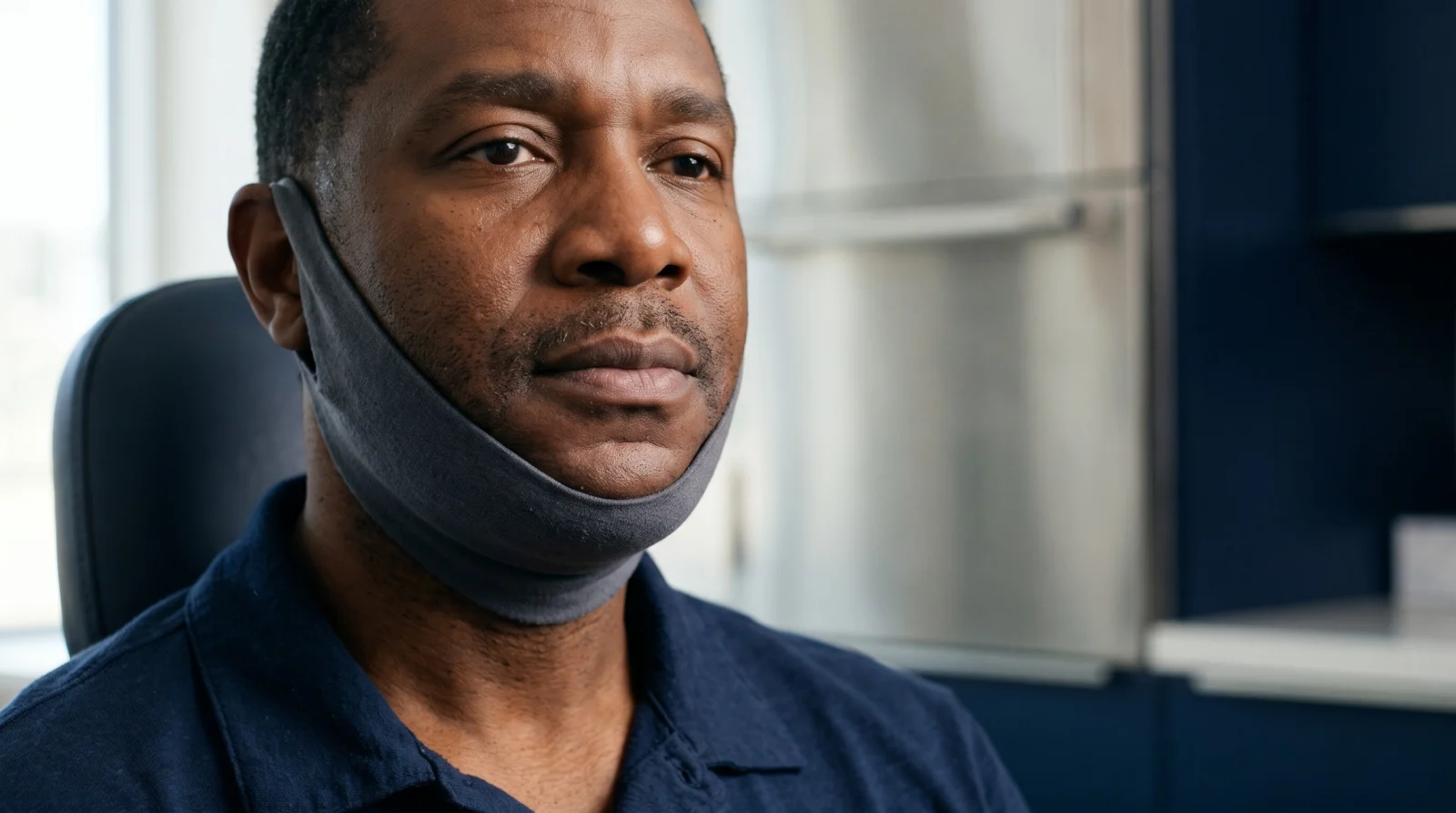
The first week is mainly about protecting the surgical area while swelling begins to recede. You may have a support dressing, temporary limits on chewing, and instructions about oral hygiene or external incision care, depending on the approach.
Pain should be discussed in practical terms before surgery: which prescribed medicines to use, what level of discomfort is expected, and whom to contact after hours. Do not add over-the-counter products or supplements without checking, because some can affect bleeding or interact with other medicines.
Sleep position also matters. Many surgeons ask patients to keep the head elevated and avoid pressure on the chin. The American Society of Plastic Surgeons’ chin surgery recovery guidance emphasizes following the surgeon’s specific instructions for dressings, activity, and warning signs.
When can you return to work and exercise?
A desk-based return may be possible before all swelling has disappeared, but social readiness and medical readiness are not identical. Video meetings, public-facing work, commuting, and the ability to take breaks can each affect the plan.
Strenuous activity generally returns later than light daily movement. Exercise can raise blood pressure and increase throbbing or swelling, while contact or accidental pressure can disturb healing. Ask for written milestones covering walking, bending, strength training, and any activity that could put pressure on the lower face.
If you are deciding between an implant and bone repositioning, the schedules are not interchangeable. The guides to chin implant versus genioplasty and sliding genioplasty recovery explain why the operative plan changes the healing experience.
How can you prepare for a smoother recovery?
Good preparation reduces avoidable uncertainty. It does not guarantee a particular result or eliminate complications.
- Confirm the exact approach. Ask where the incision will be and whether you will have a dressing or support wrap.
- Set up the first nights. Arrange clean pillows for elevation, simple meals, and surgeon-approved cold therapy if recommended.
- Get care instructions in writing. Clarify mouth care, skin care, showering, sleeping, and when any dressing comes off.
- Plan practical help. Organize transport and assistance with routine tasks for the period your surgeon recommends.
- Record contact details. Know which symptoms require an urgent call and which service handles concerns outside office hours.
- Protect follow-up time. Keep scheduled reviews even if you feel well, because position and healing are assessed clinically.

The broader face, jaw and chin topic hub can help you compare lower-face planning questions. For visual preparation, explore the available face procedures without treating a visualization as a surgical plan.
The app provides an AI visualization on your own photo to help you prepare questions for a consultation with a qualified professional — not medical advice and not a prediction of results.
Which warning signs need a call to your surgeon?
Your own surgical team should define urgent symptoms before the procedure. In general, contact them promptly about rapidly increasing swelling, worsening pain that is not controlled as instructed, fever, drainage, opening of an incision, a sudden change in chin position, breathing difficulty, or any symptom they specifically flagged.
Do not try to push, massage, or reposition the chin unless your surgeon has explicitly told you to do so. A change that appears dramatic in a phone photograph still needs professional assessment rather than self-treatment.
According to a 2024 retrospective cohort study, researchers followed 80 patients for 12 months, including 42 who received chin implants, and found a significantly higher infection rate in the implant group than in the bone-repositioning group. The study was retrospective and relatively small, so it supports informed discussion rather than a personal risk estimate.
A board-certified plastic surgeon can explain how implant material, incision location, dental health, smoking history, medical conditions, and the exact operative plan may affect risk. Bring a medication list and ask how the practice handles unexpected concerns.
FAQ
How long does chin implant swelling last?
The most noticeable swelling is often early, but smaller changes can continue for weeks or months. Your surgeon should tell you when the contour is stable enough to assess.
When can I sleep on my side after a chin implant?
Wait for your surgeon’s clearance because pressure and timing depend on the approach and your healing. Ask for a specific sleeping-position plan before surgery.
Is numbness normal during chin implant recovery?
Temporary altered sensation can occur as swelling settles and tissues recover. Report new, worsening, or persistent numbness at follow-up so your surgeon can examine it.
When will a chin implant look natural?
The chin may look unusually firm or prominent while swollen. A more settled appearance develops gradually, and the timing varies by person and procedure.
What should I ask at a chin implant consultation?
Ask about implant choice, incision location, expected swelling, activity limits, follow-up, complication management, and realistic alternatives. A facial balancing consultation guide can help organize proportion-focused questions.
AI previews are visualizations, not medical advice.
Sources & further reading
- Facelift — American Society of Plastic Surgeons
- Chin surgery — American Society of Plastic Surgeons
- Cheek augmentation — American Society of Plastic Surgeons
- Buccal fat removal — American Society of Plastic Surgeons
- Facelift — NHS
- Patient safety — American Society of Plastic Surgeons
- Find a board-certified plastic surgeon — American Board of Plastic Surgery
- Cosmetic procedures — NHS
Written by the Plastic Surgery AI editorial team. Educational information only, not medical advice; always talk to a board-certified surgeon. Our editorial policy.